
PreisträgerInnen
2026
Kategorie
Großer Deutsch-Französischer Medienpreis
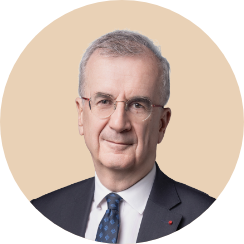
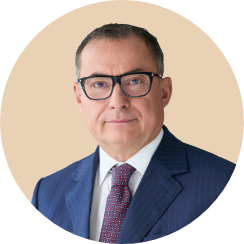
Prof. Dr. Joachim Nagel und François Villeroy de Galhau
Der Deutsch-Französische Journalisten- und Medienpreis (DFJP) verleiht den Großen Deutsch-Französischen Medienpreis 2026 an Prof. Dr. Joachim Nagel, Präsident der Deutschen Bundesbank, und François Villeroy de Galhau, ehem. Gouverneur der Banque de France, in Würdigung ihres herausragenden Wirkens für die europäische Integration, die deutsch-französische Freundschaft und eine stabile europäische Währung. Als enge Weggefährten im Rat der Europäischen Zentralbank haben sie in turbulenten Zeiten Orientierung gegeben, Vertrauen gestiftet und gemeinsam gehandelt. Sie stehen damit für den Geist der deutsch-französischen Beziehungen, der eine gemeinsame europäische Zukunft ermöglicht.
Kategorie
Newsformate

Julia Borutta
Frankreich – Wie rechte Meinungsmacher den Diskurs verschieben
Der Audiobeitrag wirft einen Blick hinter die Kulissen reaktionärer und populistischer Kräfte in Frankreich und zeigt, wie „Meinungsverschiebung“ funktioniert. Einflussreiche Milliardäre wie Vincent Bolloré oder Pierre-Edouard Stérin nutzen ihre Macht, um den öffentlichen Diskurs zu verschieben und rechtsextreme Themen salonfähig zu machen. Gerade mit Blick auf die kommenden Wahlen in Frankreich wird deutlich, wie entscheidend diese gezielte Verschiebung des öffentlichen Diskurses für die politische Zukunft Frankreichs sein wird. Julia Borutta ist Leiterin des ARD-Hörfunk-Studios in Paris und Außenkorrespondentin des WDR. Über die Ländergrenzen hinweg bewegt sie sich für ihre Rechercheprojekte in der Frankophonie.
Kategorie
Dokumentation

Aliénor Carrière
Trouver Sergueï
In einer gefühlvollen und emotionalen Reportage reflektiert die Autorin ihre eigene Geschichte und die Beziehung zu ihrem Ziehbruder Serguei, von dem sie 20 Jahre zuvor getrennt worden war. Im Herzen sieht sie ihn als Bruder, auch wenn das Wiedersehen zu einer Zerreißprobe für ihre Gefühlswelt wird. Die Zeit und der Krieg haben ihre Spuren hinterlassen und die beiden voneinander entfremdet. Ihre persönliche Erfahrung und die Auseinandersetzung mit ihrer Rolle als Journalistin machen den Artikel zu einem wichtigen Beitrag, der die Folgen des Krieges anhand einzelner Schicksale deutlich macht. Aliénor Carrière ist freie Journalistin und Filmemacherin mit Schwerpunkt auf geschlechtsspezifischer und sexualisierter Gewalt.
Kategorie
Investigation
Das Recherche-Team von NDR / WDR / SZ geheimsam mit: Le Monde (France), L’Espresso (Italy), ICIJ (USA), Kyodo (Japan), NRK (Norway), Pointer (Netherlands), SVT (Sweden), The Times (United Kingdom), Washington Post (USA)
Russian Secrets – So schützt Putin seine Atomwaffen mit europäischer Technik
Der herausragend recherchierte Beitrag zeigt eindrücklich, welche Strategien Russland entwickelt hat, um seine Atomwaffen in der Barentssee zu schützen. Im Zuge der Recherche erbringen die Reporter Belege dafür, wie deutsche Technik über Umwege für russische Interessen eingesetzt wird, und schaffen damit einen Einblick in Welten, die für die meisten Menschen verborgen bleiben würden. Der ruhige Ton und die sachliche Auseinandersetzung mit nachvollziehbaren Belegen machen die Produktion zu einem wichtigen Beitrag in Bezug auf die aktuellen Herausforderungen in der deutschen und europäischen Russlandpolitik.
Kategorie
Wissenschaft

Christoph Peters
Leben auf Plastik – Per Anhalter durchs Meer
In einer fesselnden Reportage zeigen Biologen eindrücklich, wie mikrobielles Leben auf Plastik entsteht: die sogenannte Plastisphäre. Dabei behält der Film stets einen unaufgeregten Ton und klärt über die Folgen der Entsorgung von Plastik in der Umwelt auf, ohne Panik zu schüren. Das und die starke Gestaltung in Bild und Ton machen die wissenschaftliche Dokumentation zu einem wichtigen Beitrag zur Aufklärung über Umweltthemen. Dr. Christoph Peters ist ein deutscher Dokumentarfilmer und Journalist, der für ARTE, ARD, ZDF und MDR engagierte Filme zu Wissenschaft, Geopolitik, Umwelt und kollektivem Gedächtnis produziert.
Kategorie
Jeunes Talents

Erik Hlacer
Braunes Pflaster
In einer humorvollen, satirischen Art zeichnet Erik Hlacer ein Bild der Lage im südfranzösischen Béziers, wo Lokalpolitiker unter dem Deckmantel von „Ordnung und Sauberkeit“ rechtlich fragwürdige Lösungen für das Hundekotproblem der Stadt durchsetzen. DNA-Proben, eine Datenbank und mehr Überwachung sind nur ein Auszug des populistischen Denkens, in dem der Zweck die Mittel heiligt und der Rechtsstaat zunehmend auf der Strecke bleibt. Erik Hlacer ist Journalist und arbeitet unter anderem für die FAZ, den WDR und die Zeit. Seine Texte geben dem eine Stimme, was im öffentlichen Diskurs zu oft unsichtbar gemacht wird.
Kategorie
Spezialpreis

Hugo Travers
HugoDécrypte – Actus du jour
Mit „HugoDécrypte“ hat Hugo Travers ein Nachrichtenformat geschaffen, das politische und aktuelle Themen für ein breites Publikum zugänglich macht. Seine Inhalte greifen sowohl nationale als auch internationale Themen auf und übersetzen komplexe Entwicklungen in kompakte Sprache. Dabei gewinnt er die Aufmerksamkeit einer ganzen Generation junger Menschen in Frankreich, die immer mehr auf klassische Nachrichtenangebote verzichten und sich über die sozialen Medien informieren. So ist Hugo Travers nicht nur ein Content Creator, sein Engagement leistet auch einen wichtigen Beitrag zur Demokratie in Frankreich und der frankophonen Welt.
Jurymitglieder

Sébastien Baer
Radio France
Patricia Brever
Saarländischer Rundfunk
Franck Buchy
Dernières Nouvelles d’Alsace (DNA)

Dr. Anna Carthaus
ZEIT online
Gwenaëlle Deboutte
PV Magazine Group

Martin Ehrmann
ARTE/ZDF

Laurent Genvo
Radio Accent 4

Pierre Girard
freier Journalist / Journaliste indépendant
Christel Haas
ZDF

Christoph Heinemann
Deutschlandradio

Virginie Herz
France 24

Frank Hofmann
Deutsche Welle

Hélène Kohl
freie Journalistin / Journaliste indépendante

Dr. Eva Sabine Kuntz
Deutschlandradio

Dagny Lüdemann
ZEIT online
Michele Manca
DFJW/OFAJ

Bärbel Moser
France Médias Monde

Prof. Jürgen Ritte
freier Journalist / Journaliste indépendant

Tara Schlegel
Radio France

Nele Schmidt
Deutsche Welle

Patrick Schulze-Heil
ARTE

Oliver Schwambach
Saarbrücker Zeitung

Romy Straßenburg
freie Journalistin / Journaliste indépendante
Dr. Udo Thelen
Deutsch-Französiche Hochschule / Université Franco-Allemande

Kay Wagner
Belgischer Rundfunk

Niels Waibel
Südwestrundfunk

Thomas Wieder
Le Monde

Patrick Wiermer
Saarländischer Rundfunk

Alexander Wolkers
ARTE G.E.I.E
Univ.-Prof. Dipl.-Chem. Holger Wormer
TU Dortmund
Die PreisträgerInnen
2025
Kategorie
Großer deutsch-französischer Medienpreis

© Zoé Joubert/DFJP
Zaho de Sagazan
Zaho de Sagazan
Die junge Sängerin aus St. Nazaire begeistert das Publikum auf beiden Seiten des Rheins durch ihre ungewöhnlichen Chanson-Elektro-Verbindungen. Zugleich sucht sie in ihrer Kunst immer wieder die Brücke zu Deutschland: Inspiriert durch Kraftwerk, geprägt von der Berliner Szene und deutschen Künstlerinnen und Künstlern, gehört der Antikriegssong „99 Luftballons“ von Nena, den Zaho de Sagazan auf Deutsch singt, zu ihrem ständigen Konzertrepertoire. Der Song aus den 80ern ist auch Ausdruck ihrer Liebe zur deutschen Sprache und zu dem Nachbarland, in dem sie als Austauschschülerin war.
Die Künstlerin, die aus ihrer Haltung gegen jedwede Art von Diskriminierung und politischem Extremismus keinen Hehl macht, füllt inzwischen weltweit große Hallen. Sie setzt sich für den Zusammenhalt unserer Gesellschaften ein und setzt damit ein wichtiges Zeichen für mehr Solidarität zwischen den Menschen ihrer Generation.
Die junge französische Sängerin Zaho de Sagazan wird 2025 mit dem Großen Deutsch-Französischen Medienpreis geehrt. Ihre Auftritte bei der Schlussfeier der Olympischen Spiele in Paris und der Eröffnungsfeier der Filmfestspiele in Cannes 2024 bleiben unvergessen.
Kategorie
Newsformate

Thibaut Madelin
Thibaut Madelin
In einer eindringlichen Reportage untersucht Thibaut Madelin das wechselvolle Schicksal des Volkswagenwerks in Zwickau, Sachsen. Als industrielles Aushängeschild der ehemaligen DDR hatte dieser Standort die Umstellung auf Elektroantriebe in 2019 gemeistert und war zu einem Symbol für den industriellen Aufschwung Deutschlands geworden. Angesichts der Energiekrise, der Rezession und der chinesischen Konkurrenz beschließt der Automobilriese jedoch, einen Teil seiner Produktion in den Westen zu verlagern, was die gesamte Region schwächt.
Anhand von Erfahrungsberichten und Analysen zeichnet der Autor ein differenziertes Bild der enttäuschten Hoffnungen auf die Aufholjagd des Ostens, 35 Jahre nach der Wiedervereinigung.
Thibaut Madelin ist Reporter bei Les Echos und auf die europäische Wirtschaft spezialisiert.
Kategorie
Dokumentation

Tetiana Pryimachuk & Philippe Lagnier
Tetiana Pryimachuk & Philippe Lagnier
In ihrem Dokumentarfilm Ukraine, l’enfance volée geben Tetiana Pryimachuk und Philippe Lagnier den jüngsten Opfern eines andauernden Krieges eine Stimme: den ukrainischen Kindern. Abseits der Bilder von Raketen und Schützengräben zeigt der Film die unsichtbaren Wunden des Konflikts – Trauma, Trauer, Angst. Durch erschütternde Zeugnisse vertriebener, verletzter oder verwaister Kinder und der Erwachsenen, die versuchen, ihnen zu helfen, zeichnen die Autor*innen das Porträt einer gebrochenen, aber würdevollen Jugend. Der persönliche Blick von Tetiana Pryimachuk, selbst Ukrainerin und Mutter, verleiht dieser Dokumentation eine seltene emotionale Kraft und Authentizität. Ein eindringliches Zeugnis über eine durch den Krieg geopferte Kindheit.
Tetiana Pryimachuk ist Journalistin und stammt aus der Ukraine, wo ihre Familie noch heute lebt. Philippe Lagnier ist Reporter bei France Télévisions.
Kategorie
Investigation

Isabel Ströh & Isabell Beer
Isabel Ströh & Isabell Beer
Was verbirgt sich hinter einem simplen Einladungslink zu einer Telegram-Gruppe? In ihrer Dokumentation für STRG_F decken Isabell Beer und Isabel Ströh ein internationales Netzwerk von Vergewaltigern auf, die sich darüber austauschen, wie sie ihre Opfer betäuben, missbrauchen und erniedrigen können. Über ein Jahr lang infiltrierten die beiden Journalistinnen diese Gruppen, identifizierten mutmaßliche Täter und machten Straftaten sichtbar, die selbst den Ermittlungsbehörden bis dato unbekannt waren. Ihre gründliche und mutige Recherche konfrontiert Justiz und Politik mit einer verstörenden Realität und wirft grundlegende Fragen zur digitalen Aufklärung und Verantwortung auf. Der Deutsch-Französische Journalistenpreis 2025 in der Kategorie Investigation würdigt eine essenzielle Recherche über sexualisierte Gewalt im Netz.
Isabell Beer und Isabel Ströh sind Investigativjournalistinnen bei STRG_F (NDR/funk). Ihre Recherchen konzentrieren sich auf sexualisierte Gewalt, Cyberkriminalität und verdeckte Ermittlungen.
Kategorie
Jeunes Talents

Luna-Shirin Ragheb
Luna-Shirin Ragheb
Im Audiobeitrag Worte sind die erste Waffe – wie eine Anwältin zur Feministin wurde zeichnet Luna-Shirin Ragheb ein eindrucksvolles Porträt der Anwältin Negar Haeri. Anhand ihres Engagements im Prozess um den Femizid an der 15-jährigen Shaïna Hansye beleuchtet die Autorin die Mechanismen einer Justiz, die gegenüber geschlechtsspezifischer Gewalt oft blind bleibt. Mit einer intimen, sensiblen und zugleich präzisen Erzählweise offenbart diese Reportage die Schwächen eines Systems und erzählt zugleich die Geschichte einer Frau, die zwischen zwei Kulturen aufgewachsen ist und ihren Weg mit Entschlossenheit geht. Eine kraftvolle Erzählung, die zeigt, welche Tiefe journalistisches Audio auch im Zeitalter flüchtiger Inhalte entfalten kann.
Luna-Shirin Ragheb ist eine junge Journalistin, die sich für gesellschaftliche Erzählungen, feministische Themen und ungehörte Stimmen einsetzt.
Kategorie
Spezialpreis „Alfred Grosser“

Karambolage
Karambolage
Seit zwanzig Jahren entschlüsselt die ARTE-Sendung Karambolage mit Humor und Kreativität kulturelle und sprachliche Unterschiede und Gemeinsamkeiten zwischen Frankreich und Deutschland.
Mit neugierigem Blick und einem journalistischen Stil, der Animation und Erzählung verbindet, beleuchtet sie jede Woche das Alltagsleben, Traditionen, Redewendungen oder historische Bezüge und offenbart dabei die feinen Nuancen beider Kulturen diesseits und jenseits des Rheins.
Dank eines zugleich lehrreichen, manchmal schelmischen und stets wohlwollenden Tons beleuchtet Karambolage die Feinheiten beider Kulturen und bringt so Europa den Zuschauern ein Stück näher.
Karambolage verkörpert den Geist des deutsch-französischen und darüber hinaus europäischen Dialogs und würdigt damit das intellektuelle Erbe von Alfred Grosser.
Für ihr vorbildliches Werk der kulturellen Vermittlung wird Karambolage mit dem Spezialpreis „Alfred Grosser“ ausgezeichnet.
Die Jurymitglieder


Die PreisträgerInnen 2024
Kategorie
Großer Deutsch-Französischer Medienpreis

WIM WENDERS
Wim Wenders
Der in Deutschland geborene Regisseur Wim Wenders zählt mit seinem umfangreichen und vielfältigen Werk zu einer der einflussreichsten Stimmen des internationalen Kinos. Der Roadmovie „Paris, Texas“ etwa wurde vor vierzig Jahren mit der Goldenen Palme in Cannes ausgezeichnet. Der Dokumentarfilm „Das Salz der Erde“ wiederum stellt die Arbeit des brasilianischen Fotografen Sebastião Salgado in den Mittelpunkt und spannt eindrucksvoll den Bogen von der Verwüstung der Erde durch den Menschen zu der Schönheit unseres Planeten. Zehn Jahre nach seiner Veröffentlichung hat der Film nichts an Aktualität und Eindringlichkeit eingebüßt und konfrontiert uns mit der Frage nach dem Umgang mit unserer Welt und danach, wie viel Zeit die Menschheit noch hat, sich dem Erhalt statt der Zerstörung ihrer Lebensgrundlagen zu widmen. Auch in seinem neuesten Film „Perfect Days“ zeigt Wim Wenders seine Fähigkeit, Hoffnungen und Ängste der Menschen in einer einzigartigen Bildsprache einzufangen. Die künstlerische Vielseitigkeit von Wim Wenders und die anhaltende Relevanz seiner Themen machen ihn zu einer Ikone des zeitgenössischen Kinos. Seine Werke berühren und begeistern sowohl ein internationales Publikum als auch die Filmwelt mit ihrer inspirierenden Kraft und schlagen Brücken zwischen Kulturen und Menschen.
Der renommierte Regisseur Wim Wenders wird mit dem Großen Deutsch-Französischen Medienpreis 2024 ausgezeichnet. Seit Jahrzehnten prägen seine außergewöhnlichen filmischen Werke die europäische Filmkultur und stellen das genuin Menschliche sowie gesellschaftliche Fragen in den Vordergrund.
Kategorie
Newsformate

Matthias Krupa
Matthias Krupa
„Es ist jetzt eine andere Angst“
Die ZEIT
In „Es ist jetzt eine andere Angst“ zeichnet Matthias Krupa ein außergewöhnliches Doppelporträt von Beate und Serge Klarsfeld. Es spiegelt die aktuellen Sorgen und Ängste der in Frankreich lebenden Jüdinnen und Juden und enthüllt die Normalisierungsstrategie der rechtsextremen Partei von Marine Le Pen. Der Sinneswandel der einstigen „Nazijäger“ steht beispielhaft für die veränderte Wahrnehmung des Rassemblement National in der französischen Gesellschaft.
Durch das Gespräch mit dem Ehepaar Klarsfeld gelingt es Krupa, das Große im Kleinen zu erzählen und dabei dahin zu gehen, wo es weh tut: Helden unbequeme Fragen zu stellen. Durch seinen zurückgenommenen, nuancierten und präzisen Stil entsteht ein neues, differenziertes Bild der Klarsfelds. Der Text lässt dennoch Raum für ein eigenes Urteil und hallt noch lange nach.
Seit 2021 ist Matthias Krupa Korrespondent der ZEIT in Frankreich. Regelmäßig schreibt er über Frankreich und setzt die Ereignisse des Landes in einen europäischen Kontext. Seit zwanzig Jahren ist er in verschiedensten europäischen Ländern tätig und konzentriert sich dabei vor allem auf politische und gesellschaftliche Entwicklungen.
Kategorie
Dokumentation

© Vera Tammen
Tanja Stelzer
Tanja Stelzer
„Ich muss noch etwas sagen“
Die ZEIT
Die Begegnung, die Tanja Stelzer in ihrem Artikel „Ich muss noch etwas sagen“ schildert, ergreift einen sofort. 80 Jahre nachdem die Französische Résistance in dem kleinen Ort Meymac im Südwesten Frankreichs eine Gruppe deutscher Soldaten erschossen hat, treffen sich die Enkelin eines der Hingerichteten und der letzte überlebende Widerstandskämpfer, der damals dabei war. Sie sucht Antworten darauf, was damals mit ihrem Großvater in Frankreich geschehen ist. Er will zum Ende seines Lebens Zeugnis darüber ablegen, was er als 17-Jähriger mit eigenen Augen sah.
Diese Reportage hat den Mut, das dunkle Erbe des Zweiten Weltkriegs aus einer selten betrachteten Perspektive zu erzählen und dabei die Graustufen zwischen Gut und Böse sensibel aufzuzeigen. Entstanden ist ein detaillierter und dramaturgisch mitreißender Text, der die Ereignisse der Geschichte wie einen Film vor den Augen der Leserinnen und Leser ablaufen lässt. Aus dem Wagnis, sich dieser Begegnung zu stellen, entsteht am Ende ein Moment der Versöhnung: zwischen der Deutschen und dem Franzosen; dem Widerstandskämpfer und seiner Vergangenheit; und der Enkelin und dem nie gekannten Großvater.
Die Journalistin und Autorin Tanja Stelzer schreibt seit 2006 für die ZEIT und ist seit 2022 Teil der Chefredaktion. In ihrer journalistischen Arbeit setzt sie sich vor allem mit gesellschaftlichen Themen auseinander und wurde dafür schon mehrfach ausgezeichnet.
Kategorie
Investigation

Mohamed Anwar, Marcus Bensmann, Anette Dowideit, Gabriela Keller, Jean Peters & Justus von Daniels
Mohamed Anwar, Marcus Bensmann, Anette Dowideit, Gabriela Keller, Jean Peters & Justus von Daniels
„Geheimplan gegen Deutschland“
Correctiv
Der Correctiv-Recherche ist es gelungen, mit klassisch-investigativem Journalismus tief in geschlossene rechte Netzwerke einzudringen. Die teils durch Undercover-Methoden zusammengetragenen Fakten, Verbindungen, Informationen zeigen, wie Rechtsextreme über Grenzen hinweg die Gesellschaft verändern wollen. Die nüchterne Darstellung verstärkt die beklemmende Wirkung des Beitrags.
Wie kaum eine andere journalistische Arbeit der letzten Jahre hat die Correctiv-Recherche europaweit politische Diskussionen ausgelöst und Menschen dazu bewegt, sich gegen Ausländerhass und für Rechtsstaatlichkeit und Demokratie einzusetzen.
Correctiv ist eine Institution im unabhängigen und investigativen Journalismus. Seit knapp zehn Jahren stoßen die Reporter und Reporterinnen der Redaktionen mit ihren Recherchen regelmäßig öffentliche Debatten an und leisten damit einen wichtigen Beitrag zu einer offenen und demokratischen Gesellschaft.
Kategorie
Jeunes Talents

Jade Briend-Guy, Elena Pompei, Malvina Raud
Jade Briend-Guy, Elena Pompei, Malvina Raud
„Grandir en Europe / Growing up in Europe“
ENTR / France Médias Monde
Das ENTR-Projekt „Grandir en Europe“ hat die Jury mit seiner besonderen Erzählung von europäischer Gegenwart und Geschichte überzeugt. Es wirft ein Schlaglicht auf die Auswirkungen von Konflikten auf das Leben von jungen Menschen an unterschiedlichen Orten in Europa: von den religiös-ethnischen Spannungen in Bosnien über wirtschaftliche Ungleichheiten in Gibraltar bis hin zum Krieg in der Ukraine.
Die Serie erzählt eindrucksvoll und intensiv, wie wichtig Frieden und Dialog im Kontext des europäischen Projekts weiterhin sind. Die jungen ProtagonistInnen kommen in dem Format ausführlich und unaufgeregt zu Wort. Der Serie gelingt es, nicht Partei zu ergreifen und sensible Themen nicht auszusparen. Ihre Erzählungen werden mit Hintergrundinformationen ergänzt und bieten Hoffnung auf ein neues Miteinander in Europa. Die Strahlkraft der Serie ist von der Sehnsucht nach Freiheit und Selbstbestimmung geprägt.
ENTR ist ein journalistisches Netzwerk unter Federführung der Deutschen Welle und France Médias Monde mit Medienpartnern aus anderen europäischen Ländern. Durch seine Ausrichtung auf soziale Medien spricht das europäische, mehrsprachige Angebot insbesondere junge Menschen an.
Kategorie
Spezialpreis

Bellingcat
Bellingcat
Seit knapp einem Jahrzehnt ist Bellingcat eine feste Größe in der internationalen Recherche. Das Kollektiv liefert akribisch recherchierte Faktenchecks, insbesondere aus Krisengebieten, in denen eine unabhängige journalistische Arbeit nur unter schwierigsten Bedingungen möglich ist. Ob aus der Ukraine, aus Russland oder aus Gaza: Bellingcat arbeitet minutiös und nachhaltig – auch um zu verhindern, dass die Macht der Bilder für Propaganda missbraucht wird. Sie stehen mit ihren Open-Source-Recherchen auf der Seite der Machtlosen, der von Gewalt Betroffenen und demaskieren die Täter. Diese Recherchen ermöglichen Aufklärung, Gerechtigkeit und Gewissheit für die Opfer. Das Kollektiv erregt mit seinen Recherchen regelmäßig weltweit große Aufmerksamkeit und zwingt sogar Despoten zu einer Reaktion. So wurde Bellingcat aufgrund seiner Enthüllung beispielsweise in Russland als unerwünschte Organisation eingestuft.
Bellingcat ist ein internationales Recherchekollektiv, das aus Rechercheuren, Investigativ- und BürgerjournalistInnen besteht, die zu verschiedensten Themen Open-Source-Recherchen durchführen.
Die PreisträgerInnen 2023
Kategorie
GROSSER DEUTSCH-FRANZÖSISCHER MEDIENPREIS

LEÏLA SLIMANI
Leïla Slimani verdeutlicht in ihren Werken auf sehr beeindruckende Weise, wie die europäische Geschichte des 20. Jahrhunderts das Privatleben und bis heute die Identität vieler Menschen prägt und nach wie vor die Ursache von Konflikten ist. In ihrer aktuellen autobiographisch erzählten Trilogie erzählt sie mit großer Einfühlsamkeit ihre eigene Familiengeschichte, die ihren Ursprung im Elsass während der deutschen Besatzung im Zweiten Weltkrieg hat. In Zeiten von Hass, Intoleranz, Fake News und der dadurch abnehmenden Bereitschaft zum offenen Diskurs sind es vor allem Kunst und Kultur, die uns einen Spiegel vorhalten und so die Chance eröffnen können, das Trennende zu überwinden und wieder aufeinander zuzugehen.

GEORGES-ARTHUR
GOLDSCHMIDT
Georges-Arthur Goldschmidt hat trotz Flucht und Vertreibung zeitlebens seinen Optimismus nicht verloren. Der heute 95-Jährige bleibt als Überlebender und Zeitzeuge des Nationalsozialismus auch für künftige Generationen eine wichtige Stimme und Informationsquelle. Seine Bücher über die ursprünglich jüdische Familie und seinen eigenen Lebensweg sind eine eindrucksvolle Schilderung, wie Gesellschaften sich unter dem Druck des Autoritären verändern und das Böse die Oberhand gewinnt. Neben seiner Tätigkeit als Schriftsteller machte sich Goldschmidt auch als Literaturkritiker und Übersetzer einen Namen. Ein Austauschprogramm zur Förderung junger Übersetzerinnen und Übersetzer trägt seit zwei Jahrzehnten seinen Namen.
Kategorie
NEWSFORMATE

NADIA PANTEL
„Wer’s glaubt“
Süddeutsche Zeitung
Nadia Pantels Artikel „Wer’s glaubt“ handelt vom Erfolg rechtsextremer Ideen, einem Thema von absoluter Dringlichkeit. Er wurde nach dem ersten Durchgang der Präsidentschaftswahl 2022 veröffentlicht und geht der Frage nach, warum es Marine Le Pen gelingt, für viele wählbar zu werden. Es mangelt nicht an Porträts und Versuchen, sich dem Phänomen Marine Le Pen zu nähern und trotzdem ragt dieser Beitrag heraus. Er überzeugt mit profunder Recherche, präzisen Beobachtungen und einprägsamen Bildern. Nadia Pantel spürt vor Ort der Begeisterung für die Präsidentschaftskandidatin des Rassemblement National nach und verbindet Reportage-Elemente mit einordnenden Aspekten. Ihr gelingt es auch, dem deutschen Publikum den Mechanismus der Entdämonisierung zu vermitteln, wie aus der Tochter des Rechtsextremen Jean-Marie Le Pen die „nett und normal“ wirkende Marine geworden ist.
Nadia Pantel, geboren 1982 in Hamburg, studierte zunächst Neuere und Neueste Geschichte und Germanistik in Freiburg im Breisgau. Nach ihrer journalistischen Ausbildung in Berlin und einem Volontariat bei der Süddeutschen Zeitung war sie bei ebendieser in der Redaktion Außenpolitik, Schwerpunkt Südosteuropa, und anschließend als Frankreich-Korrespondentin tätig.
Kategorie
DOKUMENTATION

ULRIKE BREMER
„Du gehörst mir! – Das Muster der Frauenmorde“ « Tu m’appartiens ! – Racines d’un féminicide »
ARTE / Hessischer Rundfunk
Ulrike Bremers Dokumentation „Du gehörst mir! – Das Muster der Frauenmorde“ rekonstruiert anhand von Augenzeugenberichten, Interviews mit Anwältinnen, Wissenschaftlern, Richtern und Hinterbliebenen Übergriffe und Morde durch Männer. Die Fälle aus Frankreich, Spanien und Deutschland zeigen, wie sehr diese Form von Gewalt über alle europäischen, gesellschaftlichen und kulturellen Grenzen hinaus verbreitet ist.
Außerdem deckt die Reportage Missstände in der Aufklärung und Anerkennung dieser Gewalttaten als strukturelles Problem in weiterhin patriarchalisch geprägten Gesellschaften auf und offenbart dabei feine Unterschiede im Umgang damit in den verschiedenen europäischen Staaten.
Ulrike Bremer schildert in ihrer Dokumentation nicht nur, was jeden Tag irgendwo in Europa geschieht, sondern gibt den Opfern eine Stimme und begibt sich gleichzeitig auf eine Spurensuche nach den Motiven der Täter.
Ulrike Bremer ist als freie Autorin für Dokumentationen und Features für ARTE und ARD in den Bereichen Kultur, Gesellschaft, Politik und Geschichte international tätig. Sie ist außerdem Redakteurin des Kulturmagazins „ttt“ bei der ARD.
Kategorie
INVESTIGATION

PIERE-STÉPHANE FORT
«Quatar2022, un scandale français?»
France 2
Pierre-Stéphane Fort hat die Jury in seiner Reportage „Qatar 2022, un scandale français ?“ mit einer starken investigativen Recherche über die schockierenden Umstände der Fußball- WM in Katar überzeugt. Beleuchtet wird ein Geflecht aus politischen und wirtschaftlichen Interessen, Korruption und französischer Kampfjets und die Beinahe-Pleite von Paris Saint-Germain mit der Vergabe der Fußball-WM an Katar zusammenhingen.
Mit der Undercover-Recherche zu den Lebens- und Arbeitsbedingungen der Gastarbeiter ist Fort ein großes persönliches Risiko eingegangen. Der Journalist widerlegt damit die Hochglanz-PR des Emirats, der FIFA und der zahlreichen Unterstützer aus Politik und Wirtschaft – und setzt insbesondere den französischen Fußballverband unter Zugzwang. Was den Film so besonders macht: In mehreren konfrontativen Interviews schafft Pierre-Stéphane Fort außergewöhnliche Fernsehmomente.
Pierre-Stéphane Fort studierte Journalismus an der École Supérieure de Journalisme in Lille und Montpellier. Nach verschiedenen journalistischen Stationen widmet er sich heute als in Paris ansässiger freier Journalist vornehmlich investigativen Themen.
Kategorie
NACHWUCHSPREIS

LEA WEINMANN
„Was geschah am Grenzzaun von Melilla“
Süddeutsche Zeitung
Die Jury zeichnet Lea Weinmann für ihre mutige Entscheidung aus, in dem Artikel „Was geschah am Grenzzaun von Melilla?“ ein furchtbares Ereignis zu beleuchten, das die europäischen Werte zu einer Zeit infrage stellt, in der das tagesaktuelle Hauptaugenmerk vor allem auf dem Krieg Russlands gegen die Ukraine li egt.
Ihre Rekonstruktion dieses bestimmten Tages am Grenzzaun von Melilla schildert den Leserinnen und Lesern die dramatischen Vorkommnisse, die sich vor dem Hintergrund einer fehlenden europäischen humanen Migrationspolitik abspielen. Die Reportage warnt uns vor dem, was zu erwarten ist, wenn keine geeigneten Antworten auf die globalen Fragen nach Sicherheit, sozialer Gerechtigkeit und die Klimakrise gefunden werden.
Im Jahr 1997 geboren, führte Lea Weinmanns Berufsweg sie nach ihrem Abschluss an der Hochschule der Medien über verschiedene Praktika und Hospitanzen, u.a. bei SWR1 und dem Handelsblatt, in ihre heutige Tätigkeit als Redakteurin bei der Süddeutschen Zeitung im Ressort Investigative Recherche.
Kategorie
SPEZIALPREIS

JENS STROHSCHNIEDER
„ZDFzoom: Weinen werden wir später – Junge Ukrainer und der Krieg“
ZDF
Die Jury zeichnet Jens Strohschnieder für sein außergewöhnliches Portrait der vom Krieg betroffenen ukrainischen Jugend aus. Der von ihm gezeigte intime Einblick hält dem Publikum einen Spiegel vor, der es dazu bringt, sich mit jeder dieser Erzählungen über ein vom Krieg erschüttertes Leben zu identifizieren.
Der Autor präsentiert uns keine Helden, sondern er zeigt junge, resiliente Ukrainerinnen und Ukrainer, die entschlossen sind, ihren Lebensstil im Namen der Freiheit beizubehalten. Die von diesen jungen Persönlichkeiten ausgestrahlte Hoffnung und Lebenskraft sind höchst inspirierend. Ihr Schicksal ruft uns außerdem die Zerbrechlichkeit unserer eigenen Demokratien in Erinnerung.
Jens Strohschnieder widmet sich seit 2003 mit großer Leidenschaft Reportagen und Dokumentationen. Über 160 längere Filme produzierte er als Autor und Regisseur, unter anderem für das ZDF, die ARD und ARTE. Neben seiner Tätigkeit als Filmemacher ist er zudem als Musiker, Komponist und Buchautor aktiv.
PreisträgerInnen
Wir gratulieren den Preisträgern und bedanken uns bei allen TeilnehmerInnen für ihre wertvollen Beiträge und ihr Engagement.

PreisträgerInnen
Wir gratulieren den Preisträgern und bedanken uns bei allen TeilnehmerInnen für ihre wertvollen Beiträge und ihr Engagement.
Kategorie
GROSSER DEUTSCH-FRANZÖSISCHER MEDIENPREIS

ANSELM KIEFER
Anselm Kiefer gehört weltweit zu den wichtigsten Künstlern der Gegenwart. Von seinen ersten Bildern 1969 über seinen Auftritt bei der Kunst-Biennale in Venedig 1980 bis hin zu seiner jüngsten Ausstellung im Grand Palais Éphémère beeindruckt Kiefer immer wieder aufs Neue durch seine Vielseitigkeit und seine künstlerische Auseinandersetzung mit Geschichte, Religion, Philosophie und den großen Mythen der Menschheit.

BÉNÉDICTE SAVOY
Bénédicte Savoy gehört international zu den renommiertesten Kunsthistorikerinnen. Der französische Staatspräsident Emmanuel Macron beauftragte sie und den senegalesischen Wissenschaftler Felwine Sarr im Jahr 2018 mit einem Forschungsbericht zur Herkunft von Kunstschätzen aus den ehemaligen Kolonien und zum Umgang mit diesen. Darüber hinaus hat Bénédicte Savoy diese Debatte in Deutschland wesentlich mitgeprägt.
Kategorie
NEWSFORMATE

MICHAELA WIEGEL
„Endstation Calais“
F.A.Z.
In ihrem Artikel beleuchtet Michaela Wiegel anhand einer Reihe von Zeugenaussagen und Begegnungen den prekären Alltag Geflüchteter in der französischen Stadt Calais sowie einige Aspekte des Umgangs mit der sogenannten Flüchtlingskrise vor Ort. Viele ihrer Gesprächspartner stammen aus Afrika und möchten nach Großbritannien gelangen.
Nach ihrem Abschluss am Institut d’Etudes Politiques de Paris („Sciences Po“), einem Aufenthalt in Harvard und an der Kennedy School of Government, wo sie einen Master in Public Administration absolvierte, wurde Michaela Wiegel 1998 Redakteurin und Frankreichkorrespondentin in Paris für die Frankfurter Allgemeine Zeitung.
Kategorie
DOKUMENTATION

HARRIET KLOSS & MARKUS THÖSS
„RE: Das Attentat von Nizza – Leben nach dem Terroranschlag“
ZDF/ARTE
Ein Dokumentarfilm über die Gefühle der Menschen, die direkt und indirekt vom Anschlag in Nizza im Jahr 2016 betroffen waren. Die Langzeitbeobachtung einer deutschen Schulklasse, die zum Zeitpunkt des Attentats auf Klassenfahrt in Südfrankreich war, macht die unumkehrbaren, gravierenden Auswirkungen der Traumata auf die Betroffenen und ihr familiäres Umfeld sehr deutlich.
Harriet Kloss, geboren 1963 in Berlin, machte eine Ausbildung zur Fotografin und arbeitete zunächst als Kameraassistentin, danach als Regieassistentin und freischaffende Filmemacherin in Berlin. Markus Thöß, geboren 1967 in Berlin, ist Autor, Regisseur, Kameramann und Cutter. Seit 1996 produziert er seine eigenen Dokumentarfilme.
Kategorie
INVESTIGATION

CLAIRE TESSON
«Déchets, la grande illusion»
FRANCE TÉLÉVISIONS
In der Reportage “Déchets, la grande illusion” enthüllt Tesson mit dem Team von Cash Investigation die Recycling-Lügen der Müllindustrie in Frankreich sowie der vermeintlich nachhaltigen Biogas-Produktion in Frankreich und Deutschland.
Claire Tesson ist freie Journalistin und Filmemacherin. Nachdem sie für Magazin- und kürzere Formate gearbeitet hat, dreht sie seit fünf Jahren längere Dokumentarfilme für France 5 und France 2. Ihr besonderes Interesse gilt den Themenbereichen Polizei und Justiz sowie sozialen Problemen.
Kategorie
NACHWUCHSPREIS

JANIS GEBHARDT
„Europa, was los“
BUNDESKUNSTHALLE
Der Podcast „Europa, was los”, für den sowohl Expertinnen und Experten als auch Jugendliche interviewt werden, spiegelt die Sicht junger Europäerinnen und Europäer wider, die aufgrund der aktuellen Krisen und Herausforderungen der Zukunft mit Skepsis begegnen, jedoch zur aktiven Mitgestaltung motiviert sind. Der Podcast stellt sich den aktuellen Fragen und betont, dass die Lösung vieler Probleme nur durch grenzüberschreitende, internationale Zusammenarbeit möglich sein wird.
Janis Gebhardt hat Germanistik, Philosophie und Literaturwissenschaften in Frankfurt am Main, Berlin und Cambridge studiert. Ab 2017 arbeitete er bei verschiedenen Strategieberatungen mit einem Fokus auf Digitalisierung, Medien und Formatentwicklung.
Kategorie
SPEZIALPREIS

MEDUZA
MEDUZA ist eine zweisprachige Internetzeitung mit Sitz in Riga. Das Portal wurde 2014 als Exilmedium gegründet und berichtet in russischer und englischer Sprache. Ziel ist es, in der aktuellen Situation, den Userinnen und Usern verifizierte Fakten sowohl über die Lage an der Kriegsfront als auch über die Entwicklungen innerhalb der russischen Gesellschaft zur Verfügung zu stellen. Das Portal hat weit mehr als 10 Millionen Besucherinnen und Besucher pro Monat.
Preisträger 2021
Kategorie Großer Deutsch-Französischer Medienpreis
Matthias Maurer & Thomas Pesquet
stellvertretend für die Europäische Weltraumorganisation ESA

Matthias Maurer & Thomas Pesquet
Der Große Deutsch-Französische Medienpreis 2021 geht an die Europäische Weltraumorganisation ESA und die beiden befreundeten
Astronauten Thomas Pesquet und Matthias Maurer. Auf diese Weise soll ein Zeichen für die internationale Zusammenarbeit und die Bedeutung von Wissenschaft für den gesellschaftlichen Dialog gesetzt werden. Mit dem Blick aus dem Weltall können sich Thomas Pesquet
und Matthias Maurer ein unmittelbares Bild vom Zustand der Erde machen. Durch ihr Expertenwissen, ihre Interviews und zahlreichen
Beiträge in den Medien tragen sie außerdem ganz wesentlich dazu bei, vielen Menschen das Verständnis für wissenschaftliche Zusammenhänge näher zu bringen. Die ESA ist ein europäisches Vorzeigeprojekt und die aktuelle Mission steht in besonderer Weise für die
deutsch-französische Zusammenarbeit.

(© Alain de Halleux)
Dieser Dokumentarfilm zeigt auf beeindruckende Weise die globalen Auswirkungen des Coronavirus. Ein Jahr nach Ausbruch der Pandemie
zieht Alain de Halleux Bilanz – und die fällt nicht gut aus. ExpertInnen sowie ProtagonistInnen aus der ganzen Welt kommen zu Wort, es entsteht ein ebenso klares wie verheerendes Bild. Das Coronavirus erhält in seiner Reportage eine Stimme und blickt auf unsere Welt mit all ihren Komplexitäten, Verwerfungen und Missständen eines auf Maximierung ausgelegten globalisierten Wirtschaftssystems. Nach seinem Diplomstudium in Chemie zog es Alain de Halleux in die Filmbranche, er studierte in Brüssel Filmregie. Neben Werbefilmen und Videoclips konzentriert sich der Produzent und Drehbuchautor insbesondere auf Dokumentarfilme zu den Themen Umwelt, Soziales, Wirtschaft und Politik.
Kategorie Audio
Katrin Aue, Carolin Dylla
Europas Corona-Grenzen: Ein Feature über Abschottung, Misstrauen und Solidarität
Saarländischer Rundfunk

(© Katrin Aue)

© Carolin Dylla
Mit Beginn der Corona-Krise wurden längst überwunden geglaubte Grenzen wieder sichtbar. In der Großregion Frankreich, Luxemburg und
Saarland haben die Menschen zwischen Mitte März und Mitte Mai 2020 eine starke Veränderung durchlebt: Was passierte da, im längst alltäglich gelebten „grenzenlosen Europa“? In ihrem Feature haben Katrin Aue und Carolin Dylla die konkreten Auswirkungen der verschärften Grenzkontrollen auf das Leben der Menschen dargestellt, nach den politischen und gesellschaftlichen Folgen gefragt – und nach den Folgen für Europa.
Die gebürtige Ostfriesin Katrin Aue studierte Ethnologie. Sie absolvierte ein Volontariat beim RBB und war dann als Reporterin bei den politischen Magazinen des RBB-Fernsehens tätig. Es folgte ein Wechsel ins Recherche-Team der Nachrichtenagentur dapd. Seit 2014 arbeitet sie als Moderatorin, Redakteurin und Reporterin beim Saarländischen Rundfunk.
Carolin Dylla hat Internationale und Europäische Governance in Münster und Lille studiert. Nach einem sechsmonatigen Praktikum bei
der Heinrich-Böll-Stiftung in Beirut arbeitet sie seit 2015 beim Saarländischen Rundfunk. Sie ist als Reporterin und Redakteurin in der
crossmedialen Politik-Redaktion des SR tätig.

(© Eva Schläfer)
Eva Schläfer erzählt auf originelle Art und Weise eine Geschichte der europäischen Solidarität während der Corona-Pandemie: Im Frühjahr
2020 erlebt ein Elsässer, wie es ist, weit von Zuhause entfernt geheilt zu werden. Denn als er aufgrund einer Covid-19-Erkrankung
im künstlichen Koma liegt, werden im Krankenhaus in Colmar die Betten knapp und er wird nach Lübeck in Deutschland verlegt.
Mitfühlend und sehr detailliert schildert die Autorin das Schicksal des Franzosen und die Zusammenarbeit zwischen deutschen und
französischen PflegerInnen.
Nach ihrem Journalistikstudium war Eva Schläfer als Freelancerin im Presse- und PR-Bereich tätig. Es folgte die jahrelange Arbeit in der
Unternehmenskommunikation. Seit 2017 arbeitet sie als freie Journalistin mit einem Schwerpunkt für medizinische Sachthemen, unter
anderem für die Frankfurter Allgemeine Sonntagszeitung.

© Kseniya Halubovich
Seit der umstrittenen Wiederwahl von Präsident Alexander Lukaschenko erlebt Belarus eine Welle von Protesten. Tausende Demonstranten gehen jede Woche auf die Straße, um eine Neuwahl zu fordern. Machthaber Lukaschenko, der sich seit 26 Jahren an die Macht klammert, droht ihnen mit Vergeltung. Seit August 2020 berichtet Korrespondentin Kseniya Halubovich in einem Videoblog direkt aus Minsk. Dort, wo praktisch keine Pressefreiheit herrscht, begleitet sie tagesaktuell die Protestierenden und dokumentiert deren Aktionen, Ängste und Ambitionen in kurzen Interviews. Mit ihrer mutigen Arbeit gibt sie Einblicke in ein Land, dessen Ringen um Freiheit und Demokratie ganz Europa in Atmen hält.
Kseniya Halubovich studierte an der belarussischen Akademie der Künste. Sie begann als Freelancerin für belarussische Medien zu arbeiten. Anfang 2020 berichtete sie als Journalistin des Oppositionssenders Belsat über die Corona-Pandemie. Nach den belarussischen Präsidentschaftswahlen im August 2020 begann die Fotoreporterin, die Demonstrationen gegen das Regime von Machthaber Lukaschenko mitzuverfolgen.

(© Adrien Candau)

© Julien Duez
Die Autoren greifen in ihrem Artikel eine Thematik auf, die in Deutschland und Frankreich noch wenig bekannt ist: den Lebensweg des
israelischen Fußballtrainers Emanuel Schaffer. Hierbei wird das Leben und Werk eines Mannes portraitiert, für den die deutsch-israelische Aussöhnung nach dem Zweiten Weltkrieg in erster Linie eine Angelegenheit des Fußballs war. Adrien Candau und Julien Duez zeigen, dass auch Sport Weltgeschichte schreiben kann und beleuchten eine andere Seite des Fußballs. Entstanden ist dabei ein spannender und zielgruppengerecht
aufbereiteter Artikel.
Adrien Candau studierte am Institut Français de Presse und arbeitet seit 2016 als Journalist für das französische Fußballmagazin So Foot.
Julien Duez absolvierte in Paris einen Master in deutsch-französischem Journalismus. Seit 2017 ist er als Freelancer für verschiedene Printmedien tätig, unter anderem für So Foot.
Prize Winners 2020
Category Video
Robert Bongen, Julian Feldmann and Fabienne Hurst
Das ungesühnte SS-Massaker: Ein französisches Dorf kämpft um Gerechtigkeit
ARTE/NDR

(© Jan Littelmann)
In Ascq, a village in the North of France, SS soldiers murdered 86 civilians in the night from April 1 to 2, 1944. The locals are unable to forget this cruel massacre to this day. Especially as one of the perpetrators, Karl Münter, although sentenced to death by a French military court, has never been extradited by Germany and lived unperturbed in Hildesheim. On the occasion of the 75th remembrance day of the massacre, the three reporters talk to Karl Münter and travels to the relatives of the victims accompanied by a team of three journalists. Together they try to find answers to the question: Can justice still be done after all these years?

(© Privat)
From one day to the next, Francine Kahn finds out that she is heir to a collection of 450 paintings. Sold illegally by the Vichy Regime at the time, the artworks belonging to her uncle Armand Dorville had disappeared for more than 70 years. With the help of an art historian and two genealogists, she goes on a long hunt for clues and fights for the restitution of the paintings.
She finally gets three of them back from the German government in January 2020, but the collection is still largely untraceable.
Category Text
Elisa-Madeleine Glöckner, Veronika Lintner, Jonas Voss & Julian Würzer
Augsburger Allgemeine

(© Thomas Obermeier)
In the run-up to the European election, four trainees went on a journey of discovery through several EU countries. In personal conversations and site visits, the journalists-to-be inform on various aspects of the EU, highlighting its achievements and values, but also current difficulties. Clichés are picked up on and instantly demolished with a wink. All this without neglecting the subjective perception of Europe.
Small anecdotes, observations and thoughts find their place in the 16-page newspaper supplement comprising various journalistic genres. A contribution that generates enthusiasm for Europe and its people.

It is Europe’s largest ongoing tax fraud: 50 billion euros are stolen from EU member states every year. The method: VAT carousels. And while the organized gangs find ever new opportunities for fraud, the authorities are unable to agree on a coordinated approach. In a border-crossing investigation by over 60 journalists from 30 countries, the CORRECTIV research centre and its partners uncover the methods of the criminals and track the journey of the stolen money. Extensive graphics, texts and videos help website visitors gain a highly transparent insight into the complex subject matter.
Category Young Talents
Anaelle Abasq, Alexia Echerbault, Lara Gohr, Thabo Huntgeburth, Lukas Knauer, Louise Pillais, Mathilde Pires, Meret Reh, Camille Sarazin & Ramona Westhof
Plus chaud que le climat – Heißer als das Klima
Deutschlandfunk Kultur

(© Lukas Knauer)
One subject, ten young journalists, and five production days in Nîmes: These are the framework conditions of this intercultural radio project. The result is a bilingual broadcast scrutinizing climate protection with dedication from various perspectives. The team explains the consequences of progressive globalization using viniculture, fuel poverty, textile production and the climate protest culture as examples. To this end, the project members conducted interviews with local companies and institutions. In just under an hour of airtime, they have managed to tailor comprehensive and well-researched information about both countries to a young audience.
Prize Winners 2019
Media Prize

(© picture alliance / dpa / Christian Böhmer)
For decades, Beate and Serge Klarsfeld have been role models for the fight against forgetting, for humanity and against a nationalism that promotes the exclusion and stigmatization of different-minded people and other faith groups. The extraordinary couple stands for the reconciliation between peoples and, in particular, between France and Germany. The tireless fighters for human rights and a peaceful coexistence are architects of today’s Europe and the European unification.
Video Category
Kirsten Esch
Forschung und Verbrechen – Die Reichsuniversität Straßburg
Südwestrundfunk/ARTE

(© Private)
This film is about the Reich University Strasbourg, which was opened in occupied France in 1941 and at which top scientists of the German Reich worked. The director Kirsten Esch, whose grandfather was the dean of the University, uncovers how the intellectual elite cooperated with the SS and reveals how the professors were involved in the terrible crimes committed by the Nazis.

(© Christophe Abramovitz)
This weekly radio show gives young Europeans of different backgrounds the chance to speak and investigates their relation with the continent. By her modern tone, the choice of the interlocutors and her journalistic commitment, the author shows that talking about Europe can be exciting.
Text Category
Lena Kampf
Die unendliche Geduld von Papier
Die unendliche Geduld von Papier
Süddeutsche Zeitung Magazin

(© Philipp Boegle)
One year after #MeToo and with the help of the notebook of Jeanne Ponté, parliamentary assistant, this article denounces sexual harassment in the European Parliament. In a respectful as well as appropriate tone and without sounding preachy or lurid, the author describes how the good intentions of a European institution are petering out after the interest in the topic wanes.
Multimedia Category
Students of the Centre universitaire d’enseignement du journalisme Strasbourg

The European agriculture has many sides. On their multimedia website, the CUEJ Strasbourg students shed light on the different challenges faced by European farmers and address amongst other topics the repercussions of climate change, organic farming and the Common Agricultural Policy (CAP).
Young Talent Prize Category
Carolin Dylla
Der Aachener Vertrag oder „Élysée 2.0“ – Upgrade für die deutsch-französische Zusammenarbeit?
Saarländischer Rundfunk

(© Private)
In her reportage, the journalist Carolin Dylla succeeds in closely analyzing the complicated legal text of the Treaty of Aachen, signed in 2019. Against the background of increasing nationalist tendencies, she manages to compile an interesting report in which politicians, people from both sides of the borders as well as political scientists present their views.
Prize Winners 2018
Media Prize
Prof. Dr. Jürgen Habermas

(© Wolfram Huke)
The philosopher and sociologist Prof. Dr. Jürgen Habermas is awarded the prize for his decades of engagement for a democratically constituted Europe. He has informed generations of academics with his scientific work, and decisively influenced the debate about the future of Europe with his regular interjections.
Video Category
Karine Comazzi & Patrice Burgère representing the reportage team
Les Klarsfeld, chasseurs de ténèbres
France 2

(reporter team © private)
The film “The Klarsfeld, Hunters of Darkness” tells the story and illustrates the struggle of Beate and Serge Klarsfeld, a Franco-German couple who dedicated thirty years to hunting down Nazi war criminals and Vichy collaborators responsible for the deportation of 76,000 Jews in France.

(© private)

(© Frédéric Klemczynski divergence images)
“The Little Returners” gives a voice to jihadists’ children who were born in the Iraqi – Syrian zone or taken there and are now coming to France. In interviews with relatives and experts, Emilie Denètre and Adèle Humbert paint a sweeping picture of the situation in France.

(© private)
The reportage “Two Brothers” is much more than just a thriller: it is a story of integration success and failure as exemplified by the brothers Hamid and Hakim, whose life trajectories couldn’t be more different. Using Marseille as an example, the author succeeds in casually and adroitly communicating important information about the reality of underprivileged districts in France’s cities.
Multimedia Category
Donatien Huet, Simon Jockers, Annika Joeres, Jade Lindgaard & Felix Michel

The “Searise” project enables the global problem of climate change to be experienced on a local and regional level. With its vivid presentation form, “Searise” invites its users to literally dive deeper into the subject.
Young Talent Prize Category
Anika Maldacker
Badische Zeitung

(© private)
In her reportage, Anika Maldacker describes the desperate fight to preserve the regional language in Alsace. In the framework story about a holiday camp where children learn Alsatian, the author skilfully blends elements of reportage, historical background and the current political debate around the territorial reform in France.
Prize Winners 2017

The great Media Prize is awarded to SOS MEDITERRANEE this year. This sea rescue aid organization is a European NGO established in 2015 on the initiative of merchant ship captain Klaus Vogel and its present Director for Humanitarian Projects, Sophie Beau. It has been operating in the Mediterranean with the rescue ship Aquarius since February 2016. SOS MEDITERRANEE has come to the rescue of over 13,000 people so far, saving their lives.

Christian Frey (© private)

Susanne Wittek (© Inga Sommer)
“Quiet Rescuers” gives a voice to Jewish children rescued in World War II and the descendants of their rescuers, “perfectly normal” French people. The strength of this documentary resides in the quality of the interviews, which yield moving testimonies. The film was produced by Reinhardt Beetz (Gebrüder Beetz Filmproduktion) and funded by the Shoah Foundation, Herbert and Elsbeth Weichmann Foundation and Körber Foundation.

Sabine Wachs
(© Pasquale D’Angiolillo)
Sabine Wachs succeeds in making us witness one of Europe’s greatest challenges. She shows with journalistic distance how a civil society initiative upholds humanitarian values.
Text Contribution Category
Marion Van Renterghem
Le Monde

Marion Van Renterghem
(© Astrid Di Crollalanza)
“Angela Merkel from East to West“ by Marion Van Renterghem is a successful series portraying the most influential woman in Europe. Every part of the series highlights a specific character trait of Angela Merkel that then merges into a coherent mosaic of attributes.

Vera Rudolph
(© Constant Formé-Bècherat)
Vera Rudolph has collected honest, surprising and emotional answers to the question of defining Europe in five European countries. Her multimedia dossier lets the user partake in the very personal thoughts of passengers in Paris, Warsaw, Sophia, Madrid and Athens.

Sophie Serbini (© private)

Côme TESSIER (© Benjamin Rullier)
Sophie Serbini and Côme Tessier have not only succeeded in mapping out various sides of Jérôme Boateng’s personality, but also in outlining the interplay between the footballer and the public. The article speaks to all age groups because of its style, and is also interesting for its French readers.
Prize Winners 2016
Media Prize
Jean Asselborn

Jean Asselborn (Ⓒ SIP)
The Foreign Minister of Luxembourg, Jean Asselborn, is honoured with the 2016 Franco-German Media Prize for his engagement for European integration. Jean Asselborn has acquired great prestige as a mediator between the large and smaller nations within the EU and on an international level. As an honest intermediary for Europe’s essential values, he is warning against the relapse into nationalisms and interventions in the freedom of the press and opinion on a European level. Jean Asselborn is the first winner of the Franco-German Media Prize to come neither from France nor Germany.
Video Category
Christian Dassel and Clemens Gersch
#jesuischarlie: Ein Hashtag und die Folgen
Westdeutscher Rundfunk

Christian Dassel (Ⓒ private)

Clements Gersch (Ⓒ private)
The Video Prize is awarded to Christian Dassel and Clemens Gersch for “#jesuischarlie: A Hashtag and its Consequences”, shown by Westdeutscher Rundfunk.
“#jesuischarlie” strikingly outlines the role of social networks in coming to terms and mourning after 7 January 2015, and lends visibility to the authors behind the hashtag. The film stands out by its combination of the two media television and internet.

Pascale Dervieux (Ⓒ private)
The Audio Prize is awarded to Pascal Dervieux’s “Immigration in Germany: The Turning Point?”, broadcast by France Inter.
The reportage by Pascal Dervieux provides its listeners with an in-depth look at immigration issues in Germany. With the diversity of his interview partners, he draws the picture of an uneasy country looking for answers in the face of large immigration figures.

Leo Klimm (Ⓒ private)
The prize in the Text Contribution category is awarded to Leo Klimm for his article “Executive Chefs” in Capital.
A culinary masterpiece in every respect. Using “haute cuisine” as a vehicle, Leo Klimm has succeeded in introducing the reader to a part of French corporate culture. The author throws the doors to exclusive and elitist places, an unknown world even in France, wide open, and provides insights into the interplay between economic and culinary customs.
Multimedia Category
Christian Beetz, Jakob Vicari, Jens-Uwe Grau and Tanja Schmoller
In the Multimedia category, the prize goes to Christian Beetz, Jakob Vicari, Jens-Uwe Grau and Tanja Schmoller for “Falciani’s SwissLeaks” (falciani-info.arte.tv).

Christian Beetz, Jakob Vicari, Jens-Uwe Grau, Tanja Schmoller (Ⓒ private)
As exciting as a thriller, the “Falciani’s SwissLeaks“ story-telling project delves into the story of whistle-blower Hervé Falciani, whose revelations shook up Swiss banking secrecy. The reader is stimulated to interact, and thus motivated to stay on to the end.
Young Talent Prize donated by the Franco-German Youth Office
Laetitia Grevers (in cooperation with Gabriela Herpell, Alex Rühle and Lorenz Wagner)
„We all sound as if someone needed to redeem us”
„Wir klingen alle so, als müsste uns irgendwer erlösen”
Süddeutsche Zeitung Magazin

Laetitia Grevers (Ⓒ private)
With its special and elaborate format, this reportage succeeds in painting a striking emotional picture of the mood in France after the terrorist attacks on Charlie Hebdo. The dialogue form makes the reader feel directly involved.
Prize Winners 2015
Media Prize
Cartooning for Peace / Dessins pour la paix

Cartooning for Peace
“Cartooning for Peace” is an international association of press cartoonists and organizes a great number of exhibitions and dialogue events worldwide. The Franco-German Media Prize is especially awarded to honour its engagement for press freedom and respect for dissenters. With their sharpened pens, the caricaturists of “Cartooning for Peace” underline that respect for human dignity is a universal right, irrespective of religious affiliations and other cultural differences. Awarding the Franco-German Media Prize to “Cartooning for Peace” is also meant as a signal and encouragement to all journalists and cartoonists to not give in to intimidation.
Special Prize
Raif Badawi

Raif Badawi (Ⓒ private)
The members of the Franco-German Journalism Prize have decided to award an extraordinary Special Prize to the Saudi-Arabian blogger Raif Badawi this year. In this manner, they hope to support the worldwide campaign for the release of the 31-year-old internet activist, sentenced to ten years of prison, 1,000 lashes and a fine of € 200,000 because he called for a more liberal society. Badawi only survived the execution of the first 50 lashes with the severest injuries.

Andreas Pichler (Ⓒ private)
The Video Prize goes to Andreas Pichler for “Sell-out Europe”.
The documentary captivates with its controversial and so far largely neglected subject, and its playful and personal approach. The South Tyrolean author tells his story with powerful pictures and remarkable examples. The film concerns all Europeans and makes the audience think.

Hans Woller (Ⓒ private)
The Audio Prize is awarded to Hans Woller’s “Tea Party in France”, broadcast by Deutschlandfunk.
The feature takes a disturbing look at the deepening fissures in French society, taking gay marriage as a symbol of growing division. It shows the whole bandwidth of the discussion and thus gives listeners an opportunity to engage with all the conflict’s actors and facets and examine their own values.
Text Contribution Category
Ina Henrichs
Wo geht’s hier nach Frankreich?
Wo geht’s hier nach Frankreich?
Magazin des Kölner Stadt-Anzeigers

Ina Henrichs (Ⓒ private)
The prize in the Text Contribution category is awarded to Ina Henrichs for her article “Which Way to France?” in the magazine of the Kölner Stadt-Anzeiger.
Cleverly and cliché-free, the author portrays French natives who love Germany and live there. In contrast to the conventional reporting, she finds an approach that is little known so far and also very reader-friendly with its fresh writing style – a welcome change from the current toxic interjections painting a distorted picture of Franco-German relations.

Marcus-Bensmann (Ⓒ private)

David-Crawford (Ⓒ private)
In the Multimedia category, the prize goes to Marcus Bensmann and Davis Crawford for their online presentation “mh17.correctiv.org”.
Their time-consuming research has helped the authors succeed in reconstructing the putative shooting down of the passenger plane. They compared and verified the evidence provided from various sources with the facts at the site. Multimedia elements are meaningfully used to plausibly tell an interesting story.
Young Talent Prize donated by the Franco-German Youth Office
Änne Seidel / Markus Dichmann
Wo Bilder von Freund und Feind verschwimmen
Deutschlandfunk

Änne Seidel (Ⓒ DLR/Bettina Fürst-Fastré)

Markus Dichmann (Ⓒ DLR/Bettina Fürst-Fastré)
The Young Talent Prize donated by the Franco-German Youth Office is awarded to Änne Seidel and Markus Dichmann for “Where Friendly and Hostile Images Blur”, broadcast by Deutschlandfunk.
With its dense and in-depth content, the reportage shows all facets of Jewish Life in Alsace in a lively and refreshing manner. The look into the long history of Jews in the region meanwhile serves as a foil for examining the difficult present. Thanks to their thorough research, the authors succeed in providing a spot-on report without clichés.
Prize Winners 2014
Media Prize
Helmut Schmidt ✝ and Valéry Giscard d’Estaing

Helmut Schmidt ✝ and Valéry Giscard d’Estaing (photo: ZB-Fotoreport/Peer Grimm)
The former German Chancellor Helmut Schmidt ✝ and former French President Valéry Giscard d’Estaing are honoured with the 2014 Franco-German Media Prize for their outstanding services to Franco-German and European relations. Both statesmen have played a pioneering role for Franco-German cooperation and European integration and lastingly influenced them. Across party lines, they succeeded in injecting Franco-German relations with new vigour and shaping Europe decisively.
Video Category
Sabine Jainski / Ilona Kalmbach
„Superfrauen gesucht – Im Spagat zwischen Arbeit, Kindern und Pflege der Eltern“
WDR / ARTE

Ilona Kalmbach

Sabine Jainski (photo: Peter Petrides)
The Video Prize goes to Sabine Jainski and Ilona Kalmbach for the moving documentary “Superwomen Wanted – Juggling Work, Children and Parent Care”.
The film captivates with its sensitive and professional style. In a multi-facetted and understanding manner, the authors succeed in highlighting the multiple workloads of their female protagonists in France and Germany who, besides trying to balance their job with the education of their children, also have to cope with caring for their parents. In the process, they develop the various Franco-German mentalities as much as the importance of this issue for the future.

Clemens Hoffmann
The Audio Prize is awarded to Clemens Hoffmann for “The Cartel of Pearls – How the Champagne sets the Prices”, shown by WDR 5.
The jury appreciates the journalistic treatment and insights into the commercial backgrounds of the champagne business. This world of pearls is not only unlocked for the listener from a consumer’s perspective, but also that of the producers and the marketing. The jury was also impressed by the very comprehensive and wide-ranging research that enables a familiar consumer product to be examined from a new angle. The report caters to a broad audience.
Text Contribution Category
Marie-Pierre Lannelongue / Elisabeth Raether, representing the authors of
„France-Allemagne – Ich Liebe Dich (moi non plus) / Wie sagt man auf Französisch Es ist Liebe?“
M Le Magazine du Monde / ZEIT Magazin

The prize in the Text Contribution category is awarded to Marie-Pierre Lannelongue and Elisabeth Raether, representing the authors of “France-Allemagne – Ich Liebe Dich (moi non plus)”.
The jury welcomes the initiative of this joint venture between a German and a French magazine – be it in the editorial or illustrative approach. Unanimously highlighted was the article “Scenes de ménages”, which describes the cultural intricacies between German and French natives with great tact and without succumbing to cliché. The overall production draws life from the abundance and variety of the contributions and takes a precise look behind the scenes of the Franco-German partnership.
Multimedia Category
The authors of the online magazine “paroli” who contributed to “Head or Tails”

In the Multimedia category, the prize goes to the authors of the online magazine “paroli” who contributed to the “Head or Tails” project.
The project documents the lifeworlds of young Europeans in a refreshing, emotional manner. The “Head or Tails” idea is impressively realized in content as well as design terms. Just as successful is the visual language of the videos, photos and infographics. Although the presentation only works on a small number of operating system-browser combinations, the jury decided after intensive discussions to honour the project for its innovative character.
Young Talent Prize donated by the Franco-German Youth Office

Hanna Gieffers

Alain Le Treut
The Young Talent Prize donated by the Franco-German Youth Office is awarded to Hanna Gieffers and Alain Le Treut for “Imprisoned / Liberated”.
The authors relate in a moving manner how personal contacts from war captivity brought German and French natives closer together after the Second World War. The multimedia dossier casts light on a little-known aspect of Franco-German post-war history, banking on contemporary witness reports and documents in the process.
Prize Winners 2013
Media Prize

Daniel Cohn-Bendit (photo: X21de – Reiner Freese)
Daniel Cohn-Bendit foregoes Media Prize
29/04/2013: MEP Daniel Cohn-Bendit has informed the management of the Franco-German Journalism Prize that he eschews being awarded the 2013 FGJP Media Prize.
According to Cohn-Bendit, his decision is decisively based on the negative echo experienced after being awarded the Theodor Heuss Prize. He said that he would need to fear being targeted again in the upcoming Bundestag election campaign, adding that he does not wish to expose himself to this and is foregoing the award for this reason.

Delphine Prunault
The Video Prize goes to Delphine Prunault for “The German Miracle, at what Price?”, a contribution from the “Envoyé spécial” show on France 2.
The author treats of a dominant political issue in the Franco-German discussion. The film demystifies the German economy and shows the strengths and weaknesses of the German success model. With its design, clear stance and courage to be controversial, the film initiates a debate.

Delphine Simon
The Audio Prize is awarded to Delphine Simon for “My Dad’s Called Werner”, broadcast by France Inter.
The protagonists talk about themselves and their feelings with power and authenticity. Even 50 years after the Élysée Treaty, there are still important aspects of Franco-German history that have hardly been treated in the media. Delphine Simon shows us people who cannot escape the grasp of this history to this day.

In the Text Contribution category, the prize goes to the French daily “La Croix” for the dossier “France-Germany, the Golden Wedding”.
It treats of various facets of Franco-German relations from an original perspective. In the process, it describes relationships in everyday life that form the actual backbone of this friendship, and draws on many voices that reflect the diversity of the links between France and Germany.

Tawan Arun

Joris Rühl
The Multimedia Prize is awarded to Tawan Arun and Joris Rühl for “Border Portraits”, published on www.tv5monde.com.
The members of the jury were won over by the rich and modern multimedia realization of the subject of “European borders”. The authors meanwhile leave the framework of Franco-German relations and lift it to a European dimension by introducing users to new borders and familiarizing them with new neighbours.
Young Talent Prize donated by the Franco-German Youth Office
Isabelle Foucrier
ARTE

Isabelle Foucrier (photo : Julien Patry)
The Young Talent Prize donated by the Franco-German Youth Office is awarded to Isabelle Foucrier for the series “The Slide Show”, shown by ARTE.
The author realizes current issues at the interface of web, video and text creatively, originally and humorously, all while playing with the cliché of the dreaded classic slide show. The extraordinary design helps her address a broad and hence also younger audience.
Prize Winners 2012
Media Prize
Alfred Grosser

Alfred Grosser (photo: X21de – Reiner Freese)
The Media Prize is awarded to Alfred Grosser. The French publisher and political scientist has tirelessly campaigned for Franco-German reconciliation and understanding since 1945. With many publications and speeches, he has contributed to building friendly relations between the neighbours while never tiring of highlighting the commonalities and differences.

Stephan Lamby (photo: ECO Media TV-Produktion)

Michael Wech (photo: ECO Media TV-Produktion)
The Video Prize goes to Stephan Lamby and Michael Wech for their film “The Domino Effect – is the Euro Toppling?”, a ZDF/ARTE production. The documentary vividly narrates the dramatic events of the currency and debt crisis and allows viewers to partake in the reflections of important protagonists, combining them in a manner completely unheard of before.
The jury was won around by the exciting narrative style that eschews sensationalism. The difficult and abstract subject of the euro crisis has been confidently framed, understandably explained and grippingly recounted by the authors. This film meets the objectives of the FGJP in an exemplary manner because it presents this most burning issue for both countries and the whole of Europe in a manner that is transparent for the viewer.
Audio Category
Christian Buckard / Daniel Guthmann
„Ma Grande, meine Liebe, mein Leben!”
SWR/NDR/RBB

Christian Buckard

Daniel Guthmann
The Audio Prize is awarded to Christian Buckard and Daniel Guthmann for “Ma Grande, my Love, my Life!”, shown by SWR in coproduction with NDR and RBB.
This contribution is an outstanding piece of cultural journalism that is rendered truly touching by its production and realization. Although rooted in the past, it still feels contemporary through the depth of the Franco-German love story between Jean Gabin and Marlene Dietrich. The account of this previously little-known liaison shows facets of both personalities – courage, honesty, sincerity – that still move us as much today as they did then. A radio experience that captivates the listener from the first to the last minute.

Karl De Meyer
The prize in the Text Contribution category is awarded to Karl de Meyer for his article “Angela Merkel, Europe despite everything”, published in the daily “Les Echos”.
In his article, Karl de Meyer sketches a very successful portrait of the German Chancellor and her European strategy, not always that comprehensible for non-Germans. It quickly makes the reader realize the complexity of the decision-making by heads of government, and the pressure top politicians are under. The author always remains objective and journalistically correct. His line of reasoning is graced by high-calibre statements communicating plenty of background knowledge about German politics and its less visible players. An article that mediates a wealth of knowledge about one of the most powerful politicians to a French readership clearly, vividly and truthfully.

Joseph Gordillo (photo: Daniel Denise)

Laetitia Giroux (photo: Daniel Denise)
The Multimedia Prize goes to Gordillo and Laetitia Giroux for their web presentation “The Indignant”.
The bilingual web documentation makes convincing use of the internet medium’s multimedia potentials. The result is a lively picture of the various forms of this protest movement in several European countries. The user is thus enabled to trace the development of this movement since its initial spark, the book “Time for Outrage” by Berlin-born French national Stéphane Hessel.
Young Talent Prize donated by the Franco-German Youth Office
Isabelle Foucrier
www.cuej.info

The Young Talent Prize donated by the Franco-German Youth Office goes to 22 students of the CUEJ journalism school in Strasbourg for their web dossier “Ruhr conversions“, published on www.cuej.info.
The students are: Mathilde Bournique, Aurelie Delmas, Cedric Dolanc, Doup Kaigama Leyla, Renaud Fevrier, Thibaut Gagnepain, Dorothée Haffner, Fabienne Hurst, Celine Jankowiak, Marc-Andre Kruppa, Hui Lan, Clara Lecoq-Reale, Marjorie Lenhardt, Brigitte Lichtfuss, Marion Lippmann, Chloe Michelon, Anne-Claire Poirier, Wiebke Ramisch, Maren Rampendahl, Aude Raso, Frank-André Rauschendorf, Thomas Richard
The jury awarded the Young Talent Prize to this internet project because it found the modern and innovative manner the information is offered in convincing. The project uses the diverse technical possibilities of the multimedia world. With these elements, it draws a comprehensive picture of a region that has experienced profound social and economic changes. The internet user is enabled to explore this wealth by way of videos, web animations and texts. This initiative shows that a curious look at the neighbouring country can still uncover new sides of an apparently familiar society.
Prize Winners 2011
Media Prize
Volker Schlöndorff

(photo: SWR/Michael Schulze)
The 2011 Media Prize goes to Volker Schlöndorff. The internationally renowned filmmaker has lived in both Germany and France, and lastingly helped to shape Germany’s image in France with his work for decades. He is a mediator on several levels: between cultures, peoples, art forms and not least of all between generations.
Martine Laroche-Joubert
Alexis Jacquet
The Television Prize is awarded to Martine Laroche-Joubert and Alexis Jacquet for their reportage “An Operetta in Ravensbrück”, shown by France 2. It tells the moving story of the performance of an operetta composed by French prisoner Jermaine Tillon in the women’s barracks of Ravensbrück concentration camp.
The film captivates with its emotionally open meeting of generations and is a document for not turning away. It takes a new look at a part of history that appears to have been all told already. In doing so, it approaches its protagonists with great respect while eschewing effects. The five episodes persuade with their consistent style of cinematic realization.
Martin Durm
The Radio Prize goes to Martin Durm for “Mountain of Sorrow, Mountain of Hope – Searching for Meaning at the Mont Sainte Odile”, broadcast by SWR 2.
This reportage convinced the jury with its high quality, realization and the feelings it arouses. The author shows a high degree of personal involvement. Added to this personal view are many touching eyewitness reports that generate a great density. By personifying the mountain, he succeeds in showing the shared sorrow on both sides of the border. The Mont Sainte Odile brings back the same memories on either, and runs like a red thread through the reportage, which the jury regards as a radiophonic jewel. Thanks to the extraordinary realization, Martin Durm succeeds in providing for “mental cinema” in the best sense of the word.

(photo: Laurent Attias)
In the Print Media category, the prize is awarded to Karin Finkenzeller for her article “The Post Office Stays!”, published in the weekly “Die Zeit”.
The article treats of an economic issue: the privatization of the French Post Office. But instead of only providing bare facts and figures, the author fleshes out her subject so richly in sociological and cultural terms and in the history of mentalities, that reading it will provide German readers, especially, with a better understanding of why the French are so ardently attached to this institution. Finkenzeller succeeds in filling this rather dry subject with so much life that one still thinks of the article’s figures fondly days after reading it and is reminded of the Tati film “Jour de fête.
Michel Verrier
The Internet Prize donated by the Département de la Moselle is awarded to Michel Verrier for the web presentation “www.michel-verrier.com”.
In his press review, Michel Verrier summarizes the latest German daily press. In addition, he also treats of Germany’s key current affairs in his blog. His web presentation is a valuable daily information service for Francophones.
Young Talent Prize donated by the Franco-German Youth Office
Isabelle Foucrier
“Französische Praktikanten im Sauerland”
WDR 5

Dorothee Räber
The Young Talent Prize donated by the Franco-German Youth Office is awarded to Dorothee Räber for her radio feature “French Interns in the Sauerland”, broadcast by WDR 5.
Dorothee Räber has broken new thematic ground with her reportage about the international internships of trainees. The intercultural aspect is elaborated particularly well here. The feature is realized in a modern and attractive manner and holds the listener spellbound right to the end. Besides its topicality and information content, the entry most of all persuades with its high service character. The jury hopes that this decision will have a signal effect for the future to promote the search for new, current and original themes.
Prize Winners 2010
Television Prize
Frédéric Compain / Bruno Lancesseur
« EADS-Airbus, eine Staatsaffäre »
France 3 / ARTE

Frédéric Compain
Bruno Lancesseur
The Television Prize is awarded to the authors Frédéric Compain and Bruno Lancesseur for their film “EADS Airbus, an Affair of State”. The 90-minute documentary was shown by ARTE in coproduction with France 3.
The film throws light on the backgrounds of the latest scandal around insider trading by shareholders and top managers. The jury commends the intensive two-year research effort put into creating this investigative feature about the European aerospace corporation. The film additionally captivates with many unusual visual ideas and its outstanding composition.
Radio Prize
Jean-Luc Hees / Dr. Willi Steul
Radio France / Deutschlandradio
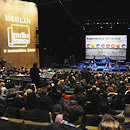
Radio France fait le mur (photo: Christophe Abramowitz)
The Radio Prize is awarded to Jean-Luc Hees and Dr. Willi Steul – as representatives of all those involved – for the “Radio France does the Wall” theme day in cooperation with Deutschlandradio.
The jury regards this as an outstanding contribution to the Franco-German dialogue. The 24-hour live broadcast from Berlin on 9 November 2009 commemorates an event that changed world history in various ways, including interviews, reports, testimonies from contemporary witnesses and a concert broadcast. It simultaneously builds a bridge to the present. The unique hook-up of all Radio France programmes enabled the significance of this anniversary to be brought home to millions of listeners.
More than a hundred Radio France staff were in Berlin for this occasion, where they were energetically supported by their German colleagues. This type of cooperation serves the aim of the FGJP, “to encourage German and French media creatives to cooperate”, in an exemplary manner.

Johannes Kloth
In the Print Media category, the prize goes to Johannes Kloth for his article “Bon appétit”, published by Saarbrücker Zeitung. The author writes about an a priori worn subject that is one of the German stereotypes of the average French – frog’s legs.
But in doing so, says the jury, it refuses to cater to these clichés, delivering a thoroughly researched story instead that reflects economic aspects along with culinary and cultural ones. Thanks to its interviews and original, apt scenes, it succeeds in toppling stubborn intercultural preconceptions.
Internet Prize – donated by the Département de la Moselle
Anne Mailliet / Brice Boussouar
„Webdoc – La chute du mur de Berlin“
France 24

Anne Mailliet

Brice Boussouar
The Internet Prize donated by the Département de la Moselle is awarded to Anne Mailliet and Brice Boussouar for the web presentation “Webdoc – The Fall of the Berlin Wall” (on the pages of www.france24.com, in cooperation with Jérôme Pidoux). The jury was impressed by the multimedia portrayal of last year’s dominant historical theme, the 20th anniversary of the Wall coming down in Germany.
Thanks to an intelligently conceived presentation that is easy to explore, the internet dossier offers a treatment that caters to the target group and, besides entertaining elements, does not neglect journalistically informative ones. The jury furthermore showed itself convinced by the professional quality of the pictures, videos and the selection of contemporary witnesses.
Young Talent Prize donated by the Franco-German Youth Office
Julia Friedrichs / Eva Müller
WDR

Julia Friedrichs and Eva Müller
The Young Talent Prize donated by the Franco-German Youth Office is awarded to Julia Friedrichs and Eva Müller for their television report “Paris rather than Benefits” from the series “WDR Worldwide”. The authors tell the story of a German family that is on benefits, but then emigrates to France as “guest workers”, full of surprises from the beginning to the end.
This is a long-term observation of three years’ duration (!) that exemplarily succeeds to show in 28 minutes how the family’s attitude to French society changes and how their integration slowly succeeds after great initial difficulties. The film fascinates because the narrative stance follows the contradictory trajectories of the family’s individual members. The film is touching, comes very close to its protagonists, but is never voyeuristic.
Prize Winners 2009
Media Prize
Simone Veil

Simone Veil, photo: dpa
The 2009 Media Prize goes to the French publisher and politician Simone Veil, member of the Académie Française. As a holocaust survivor, she championed reconciliation between France and Germany without hesitation. She stood up for this as a politician as well as a grand dame of the public discourse in France, Germany and Europe.
Television Prize
Jeff Wittenberg / Jean-Marie Lequertier
„La France : une arrogante solitude ?” [2:26 Min.]
France 2

Jean-Marie Lequertier

Jeff Wittenberg
The Television Prize goes to the French authors Jeff Wittenberg and Jean-Marie Lequertier for their reportage “La France : An Arrogant Solitude?”, a France 2 production.
In their excellently researched and structured film, they describe the “inner life of the Europe-machine Brussels”. With highly aesthetic images and a fresh eye, they uncover, layer by layer, the complex structures that political representatives move in and in which they need to make themselves heard, if possible.
The jury additionally commends the masterful camera work by Jean-Marie Lequertier.

Clarisse Cossais
The Radio Prize is awarded to Clarisse Cossais for the short “La Sehnsucht. French in Berlin”, shown by SWR 2. In a very poetic and sensitive manner, the author succeeds in opening a new perspective on their capital for Germans while simultaneously affording an insight into the “French soul”.
The jury particularly commends the excellent production and dramaturgy, as well as the courage and patience of the author to leave her protagonists the room they need to tell their stories in a very personal manner.
Print Media Prize
Alex Rühle
„Ruhig und strahlend wie die Gleise vor uns”
Süddeutsche Zeitung
In the Print Media category, the prize goes to Alex Rühle for his article “Calmly Radiant as the Tracks before us”. A German walker describes Paris along Metro line 13 and discovers the social diversity of the French capital and its suburbs.
The jury particularly highlights the humorous manner in which Alex Rühle recounts the various facets of Paris’ districts and suburbs on his little urban journey. In doing so, the author always steers clear of the customary tourist clichés. The text introduces German readers to the social and multicultural reality of Greater Paris.
Internet Prize – donated by the Département de la Moselle
Publisher and editor Redakteurin
Cécile Boutelet

Cécile Boutelet
The Internet Prize is awarded to the German edition of the web magazine “Petit Journal”.
The jury particularly appreciates the variety of the presented themes describing life and everyday social interactions in Germany from a French perspective. At the same time, “Le Petit Journal” enables French nationals living abroad to keep in touch with their home country. “Le Petit Journal” offers a wealth of practical information about cultural life, economic issues and politics, and also answers to administrative questions.
Young Talent Prize donated by the Franco-German Youth Office
Maria Wimmer
„Prostituierte sind Opfer, nicht Straftäter“
Mittelbadische Presse

Maria Wimmer
The Young Talent Prize (€ 4,000) donated by the Franco-German Youth Office is awarded to Maria Wimmer for “Prostitutes are Victims, not Criminals”, published by Mittelbadische Presse.
Sensitively, but also from an original perspective, the young author accompanies the work of two associations supporting prostitutes in starting a new life in Germany and France. She throws light on the very different realities on this and the other side of the border, compares the legal foundations, and thus delivers a blatant example for lacking harmonization in Europe.
Prize Winners 2008
Media Prize
Tomi Ungerer

Tomi Ungerer
This native Alsatian emphasizes Franco-German relations again and again. With his motifs, he builds bridges between the two countries that need no words. His provocative drawings have earned the artist popularity on this and the other side of the Rhine.
Television Prize
Cathérine Menschner
“Off to Prison – How Girls Become Delinquent”
NDR für ARTE

Cathérine Menschner
The jury commends the originality of the subject: a comparison of the life realities of delinquent girls in Germany and France.
The author has succeeded in finding disturbingly powerful protagonists who are authentic and moving – an investigative research achievement without a doubt.
Radio Prize
Vera Laudahn
“France Goes to the Polls – A Reportage Journey through Southern France”
WDR2

Vera Laudahn
In a lively manner, the author has succeeded in drawing a concise and differentiated picture of French society before the presidential election. The jury additionally commends the courage of the editorial team to schedule such a reportage series in a formatted daily accompanying programme at prime time.
Print Media Prize
Heimo Fischer
“Election Campaign in France – Snapshots”
Financial Times Deutschland

Heimo Fischer
In four short reports from various areas and regions, the author has managed to deliver a vivid and informative picture of the mood in the French presidential election campaign. He has succeeded in providing an atmospherically dense description that portraits the subject without preconceptions.
Internet Prize – donated by the Département de la Moselle
Eva John / Romy Straßenburg
www.gen80.eu
„Generation 80“

R. Strassenburg, E. John
The jury commends the refreshing and very personal look at various aspects of young people’s attitudes to life in Berlin and Paris. In doing so, “Generation 80” draws on the medium’s multimedia potentials with pictures, self-made audio clips and flash animations, but without technically overloading the presentation. Instead, it animates readers to go on a journey of discovery. The graphic design and Advent Calendar form were also found convincing.
Young Talent Prize donated by the Franco-German Youth Office
Martina Andrecht
“Parisian Life Seen by a German – Five Franco-German Pellets”
France 3 Ile-de-France

Martina Andrecht
In her features, the author lovingly confronts the French with their little quirks. The contributions are original, humorous, fresh and occasionally cheeky, but also informative. The jury’s explicit praise goes to the editorial department at France 3 Ile-de-France for their courage to champion this unusual form of reporting.
Prize Winners 2007
Media Prize
Michel Meyer

Michel Meyer
Franco-German relations have been at the centre of this native-born Alsatian’s journalistic work right from the beginning of his career. The former radio, television and newspaper correspondent in Germany has also authored many publications about his neighbouring country.
Television Prize
Arnaud Miguet, Jérôme Bony, Karine Comazzi, Bernard Lebrun
„Allemagne : la grande mutation ?”
France 2

Karine Comazzi
The jury has unanimously awarded the Television Prize to a special of France 2 magazine “An Eye on the Planet”. It has four parts and bears the title “Germany: The Great Change?”.
The magazine was broadcast shortly before the football world championship and shows a modern Germany that is little known in France: its economic, social and demographic aspects, and the special relationship between France and Germany.
The jury was impressed by the quality of the research, lively cinematic presentation, and selection of interview partners.
Radio Prize
Hélène Kohl
„Le souvenir du ‚miracle de Berne’ aujourd’hui en Allemagne“
Europe 1

Hélène Kohl
The radio jury has unanimously awarded the Franco-German Journalism Prize in the Radio category to Hélène Kohl for her feature “Remembrance of the ‘Miracle of Bern” in Germany today”.
It was broadcast by the French channel Radio Europe 1 in the run-up to the football world championship in Germany. The author has succeeded in introducing a French audience to a piece of German social history.
The jury underscores the good selection of interview partners, adroit formulation of questions and successful realization of the feature. It also reflects the atmosphere in Germany in the year of the Miracle of Bern, 1954, very well.
Print Media Prize
Michael Kläsgen
„Zimmer ohne Aussicht“
Süddeutsche Zeitung

Michael Kläsgen
In his reportage “Room without a View”, Michael Kläsgen traces the life trajectories of France’s new homeless and the “uncertain generation”.
Kläsgen renders a highly topical and relevant issue understandable for a German audience here. “You can be out on the street from one day to the next in France”, says one person concerned in Kläsgen’s reportage, just as the late Abbé Pierre once did. One understands why after Kläsgen’s reportage.
Internet Prize – donated by the Départment de la Moselle
Harald Schultz
www.frankreich-heute.de
“France Today – The Magazine for Francophile Internauts”

Harald Schultz
The weblog presents short, concise texts on various aspects of French, but also international interest. It thus facilitates a quick orientation of German readers in subject areas such as politics, business, sports, boulevard, or also tourism.
The jury awards the prize in honour of the topicality, European relevance, and journalistic professionalism of the presentation. The reporting about the elections in France is commendable.
Yount Talent Prize donated by the Franco-German Youth Office
Anne Funk
“Train Acquaintances“
Potato

Anne Funk
The new TGV line between Paris and Frankfurt am Main occasioned Anne Funk to portray people from various cities along the route.
She makes the train’s stops in Reims, Bar-le-Duc and Metz accessible to the reader in vivid pictures. Ms. Funk’s idea of introducing people inside the train, where time, space, identities and nationalities seemingly blur, is refreshing. The realization is successful and suitable for the target group of a young magazine.
Prize Winners 2006
Honorary Prize
Ulrich Wickert

Ulrich Wickert
The presenter of ARD’s daily “Tagesthemen” news magazine used to serve the ARD as a Paris correspondent for many years. He is being honoured for his reporting about France and engagement for improving Franco-German relations.
Television Prize
Imke Meier
“Vivian – Six Months Alone in France”
ZDF / Kinderkanal

Imke Meier
Imke Meier has been serving the ZDF’s children and youth programme department as an editor and author since 1998. From 1999, she has been creating TV features for 3sat-Kulturzeit, 3sat nano and the “logo!” children’s news, amongst others.
The film traces the stay of a 13 year-old German girl at a host family in France in an authentic and original manner.
Radio Prize
Aurélie Luneau
“In the Footsteps of Rudi the Red”
France Culture

Aurélie Luneau
Aurélie Luneau was born in Mühlheim (Baden-Württemberg) and holds a PhD in history. She is the author of many radio features and has been working for France Culture since 1998. Since 2004, she has been deputy editor of the show “The New Fabric of History”.
In her feature, Aurélie Luneau portrays the student movement in Germany and France with skill and historical accuracy.
Print Media Prize
Lorenz Wagner
“The General would have said ‘oui'”
Financial Times Deutschland

Lorenz Wagner
Lorenz Wagner comes from Saarbrücken originally and has been working for the Financial Times Deutschland since 1999, first as a news editor, now as a reporter. He regularly writes special features about France.
In the run-up to the French referendum on Europe, Lorenz Wagner visited De Gaulle’s place of death, arguing that De Gaulle would not have only voted ‘oui’, but also managed to convince his citizens of this.
Internet Prize – donated by the Département de la Moselle
Andreas Noll
“Search for Traces in a Bewildered Country. France – a Winter Journey“
www.frankreich-forum.de/winterreise

Andreas Noll
Andreas Noll served the daily Westfälische Rundschau as a local editor for many years and has been working for Deutsche Welle as a free journalist since 2004. He managed the launch of the Franco-German information site at www.frankreich-forum.de online.
The differentiated analysis of the events in winter 2005/06 takes many facets of the internet into account and transports great authenticity by the selection of its visual materials.
Young Talent Price donated by the Franco-German Youth Office
Rencontres and chief editor Johanna Heinen
www.rencontres.de

Johanna Heinen
Johanna Heinen was born in 1980 and comes from a Luxembourgian-Finnish family. She read French Studies at Free University Berlin. In October 2003, she founded the Franco-German magazine “Rencontres”.
The non-commercial project involves over a hundred students, journalists, translators and photographers aiming to awaken and promote interest in the neighbouring country’s language and culture.
Prize Winners 2005
Honorary Prize
Jérôme Clément, Dieter Stolte, Jobst Plog

D. Stolte, J. Clément, J. Plog
The Honorary Prize is awarded to the founders and preservers of ARTE: Jérôme Clément, Dieter Stolte and Jobst Plog. Ever since its establishment, the channel has taken up a convincing variety of subjects from both countries, treated them interculturally, and contributed to a better mutual understanding of French and German nationals to a special degree.
Television Prize
Serge Moati / Ruth Zylberman
„Enemies, Neighbours, Friends”
ARTE

S. Moati, R. Zylberman
Serge Moati has been directing documentaries and movies for television and the big screen since 1968. Starting from 1990, he has been CEO of the production company Image & Compagnie.
Ruth Zylberman is an author and director of documentaries. The two let French and German correspondents reminisce about 40 years of witnessed history: knowledgeably, often engaged, sometimes from a critical distance.
Radio Prize
Peter Hölzle / Günter Liehr
“Vichy at the Danube”
Radio France Internationale (RFI)
G. Liehr, P. Hölzle

Peter Hölzle is a freelance journalist with a PhD in literature. He works for ARD radio, but also a number of papers. Günter Liehr has been living in Paris since 1977 and is a reporter for RFI. He is also the author of many publications about the French media landscape and history of Paris.
The reportage recounts the last stop of French collaborators at Sigmaringen Castle in October 1944. The authors realized this explosive subject elegantly and with great expertise.
Print Media Prize
Pascale Hugues
“Mon Berlin” column
Der Tagesspiegel
Pascale Hugues

Pascale Hugues is the German correspondent of Le Point and Libération in Berlin. In her bi-weekly column in Der Tagesspiegel, she observes precisely, tracks down witty differences and commonalities between the French and Germans, and analyses them shrewdly.
Internet Prize – donated by the Département de la Moselle
Hélène Chevallier
“The Landing through German Eyes”
www.radiofrance.fr

Hélène Chevallier is an editor at Radio France. Her online presentation supplements a weekly dossier of Radio France and makes optimal use of the medium’s multimedia potentials (texts, images, audio clips and hypertextual links). To do this, the author has sought out contemporary witnesses in Germany.
Young Talent Prize donated by the Franco-German Youth Office
The editors of “Extra”
Le Républicain Lorrain / Saarbrücker Zeitung

To create this bilingual youth supplement, a sum total of 14 German and French youths from the Saarland and Lorraine discussed, researched and put down on paper the issues that move them in their respective language under the direction of Chris Mathieu.
Prize Winners 2004
Honorary Prize
Jean-Paul Picaper

Jean-Paul Picaper
Dr. Jean Paul Picaper studied German and holds a PhD in political science. He has held a chair at Free University Berlin for 12 years and published several books in France and Germany. His latest work, “Les enfants maudits”, was published in April 2004. Jean-Paul Picaper is being honoured for his engagement as a German correspondent for the daily Le Figaro, and for the bilingual “Eurbag Magazine” he brought into being online.
Fernsehpreis
Caterina Woj
“Vergeltung an deutschen Kriegsgefangenen”
MDR

Caterina Woj
After emigrating from the former East Germany, Caterina Woj read German, journalism and American studies at Free University Berlin. After freelancing for several newspapers and radio stations, she is now exclusively working as a television journalist, mostly reporting from abroad about culture and politics. At just under 6 minutes in length, her film “Vengeance taken on German POWs” scrupulously and poignantly thematizes the problem of the treatment afforded German prisoners of war in World War II.
Radio Prize
Emmanuel Laurentin / Véronik Lamendour
„Lecture de façades à Berlin“
France Culture

V. Lamendour, E. Laurentin
Emmanuel Laurentin has been working for Radio France since 1986. In 1999, he created “La Fabrique de l’histoire” for France Culture.
He is jointly responsible for this weekly history show with Véronique Lamendour, who has been working for Radio France since 1991. The reportage “Reading Facades in Berlin” is an original stroll through Berlin that introduces the listener to the capital’s architecture, literature, films and history.
Print Media Prize
The magazine of Süddeutschen Zeitung

The “In the Neighbour’s Garden” issue of Süddeutsche Zeitung’s magazine is being honoured for the very entertaining and simultaneously informative individual contributions by authors such as Sascha Lehnartz, Axel Hacke and Philipp Oehmke illustrating French regions, concerns and conditions.
Internet Prize – donated by the Département de la Moselle
“The Bad Wolf”
www.boeser-wolf.schule.de

The author Christiane Baumann has been accompanying a Franco-German primary school class in Berlin since 2001, supported by a number of parents. The development of this class is documented in texts, sound recordings and visual media. The trajectory of the children growing up with two languages can be traced on the website www.boeser-wolf.schule.de. An instructive and simultaneously imaginative guide by children for children and adults.
Young Talent Prize donated by the Franco-German Youth Office
Marcela Drumm
„Ein Bastard aus Marseille. Izzo und die Stadt der Kontraste“
Westdeutscher Rundfunk

Marcela Drumm
Marcela Drumm was already actively involved with university radio in Düsseldorf during her degree course in German and media science. She then worked for the press office of Nickelodeon Germany for just under two years. Right now she is a freelance author for the RBB and WDR, amongst others. Her radio reportage “A Crossbreed from Marseille. Jean-Claude Izzo and the City of Contrasts” is an excellently made literary and musical foray through Marseille.
Prize Winners 2003
Honorary Prize
Joseph Hanimann

Joseph Hanimann
Joseph Hanimann has been serving the Frankfurter Allgemeine Zeitung as a feature correspondent in Paris since 1986. He regularly reports about a broad spectrum of France-related subjects, conveying a comprehensive and thoroughly researched picture of the neighbouring country.
Television Prize
Harald Schmidt
„Die Harald Schmidt Show – Le show en français“
Sat1

Harald Schmidt
Entertainment icon Harald Schmidt has been presenting the “Harald Schmidt Show”, long since a cult, on Sat1 since December 1995. His show on 28 May 2002 had the subtitle “Le Show en Français” and was entirely in French. He thus presented the French neighbour to his German audience humorously, honestly and entertainingly for all of an hour. He is being awarded the Television Prize for this bold achievement.
Radio Prize
Radio France Internationale and Deutsche Welle
„Duo für Europa“

Occasioned by the 40th anniversary of the Treaty of Friendship between France and Germany, Radio France Internationale and Deutsche Welle developed a varied and successful cooperative project entitled “Duo for Europe”. The bilingual show skilfully presents 40 years of shared Franco-German history and its political implications.
Print Media Prize
Libération and Berliner Zeitung

The double issue of Libération and Berliner Zeitung occasioned by the 40th anniversary of the Élysée Treaty is awarded the Print Media Prize. The jury commended that this successful “double paper” offered French and German editors an opportunity to work as a team. This built a bridge of cooperation in the journalistic field.
Young Talent Prize donated by the Franco-German Youth Office
Harald Jung and his team
„Fremde Freunde“
ZDF
Harald Jung

The Franco-German Youth Office’s Young Talent Prize is awarded to Harald Jung (ZDF) and his team of French and German journalists for the show “Foreign Friends”. Broadcast by ZDF on 19 January 2003, the show is being honoured for its original and personal approach to various everyday Franco-German themes.
Prize Winners 2002
Honorary Prize
Georg Stefan Troller

Georg Stefan Troller
The 2002 Honorary Prize is awarded to the long-standing television correspondent for ARD and ZDF in Paris, Georg Stefan Troller, in recognition of his outstanding and exemplary journalistic engagement for Franco-German understanding.
Television Prize
Frédéric Chignac
„L’orchestre des chômeurs“
France 3

Frédéric Chignac
The passionate historian Frédéric Chignac wants to portray situations that are beyond imagining. As in his feature “The Orchestra of the Unemployed”, shown by France 3 in its series “Don’t Dream”. This film strikingly describes the fight for survival of an orchestra of unemployed people founded in East Berlin. This because many musical groupings fell victim to reunification for economic reasons.
Television Prize – Short Reportage
Sabine Willkop
„Jacques und Lotka“
Südwestrundfunk

Sabine Willkop
Sabine Willkop has been working for SWR television and radio since 1989. The prize is awarded to her short “Jacques und Lotka”, produced for the SWR series “Night Culture”. It tells the story of a French woman who, through a chance acquaintance at the library, discovers her true identity and that her parents – Jacques and Lotka – were executed as resistance fighters.
Radio Prize
Günter Liehr / Alexander Musik
„Der dritte Flughafen für Paris stört die Ruhe der Lebenden – und Toten“
Radio France Internationale

Günter Liehr

Alexander Musik
The radio journalist and non-fiction author Günter Liehr has been living in Paris since 1977. The publications by him on the French media landscape and history of Paris are many. The main Radio Prize is being awarded to him and Alexander Musik for the RFI radio reportage “The Third Airport for Paris Disturbs the Peace of the Living – and the Dead”. Their feature maps out the lively discussions around the construction of the planned airport, combining history and topicality very skilfully in doing so.
The literary scholar Alexander Musik has been working as a radio and print journalist since 1991. He has been living in Paris since April 2001 and created a great number of foreign reports, most of all about the social upheavals in Central Europe. He is sharing the main Radio Prize with Günter Liehr for their reportage “The Third Airport for Paris Disturbs the Peace of the Living – and the Dead”.
Print Media Prize
Michael Neubauer
„Wer fackelt am besten“
Badische Zeitung
Michael Neubauer read German, political and Romance studies in Freiburg and Basle. He is currently working as a correspondent for Badische Zeitung in Strasbourg and Alsace. His reportage “Who Torches the Best” awarded the main Print Media Prize throws a poignant light on violent youth riots in a typical high-rise estate at the periphery of Strasbourg.
Special Prize of the Franco-German Cultural Council – Radio Category
Patrice Gelinet
„La résistance allemande à Hitler”
France Inter

Patrice Gelinet
The shows of former history teacher Patrice Gelinet delve into the history of our civilization. The jury particularly commended the quality of his work and awarded him the Prize of the Franco-German Cultural Council for his feature “The German Resistance to Hitler”. The show was broadcast by France Inter in its series “2000 Years of History”. The documentary treats of an important aspect of German contemporary history skilfully and in a lively manner.
Special Prize of the Franco-German Cultural Council – Print Media Category
Jacqueline Hénard
„Viel gelobt, wenig gesehen“
Die Zeit

Jacqueline Hénard
After studying in Montpellier, Paris and London, Jacqueline Hénard worked for the Frankfurter Allgemeine Zeitung for 17 years and has been the Paris correspondent of Die Zeit since 1997. She is being awarded the Special Prize of the Franco-German Cultural Council for her article “Much praised, little watched”. Occasioned by the 10th anniversary of ARTE, she affords the reader an insight into the workings of the Franco-German culture channel and different cultures of the two countries that is as well-meaningly critical as it is knowledgeable.
Prize of the Franco-German Youth Office
Pascale Hugues / Michael Hammon
„Gehen oder bleiben? Jugendliche in Deutschland-Ost“
ARTE
Pascale Hugues

Michael Hammon
“Go or Stay” is the first film created by Pascale Hugues, German correspondent of French news magazine “Le Point”. This production for ARTE gives a voice to young East Germans trying to establish lives in the realities of east and west as a generation of doubt and hope. The jury is awarding the Prize of the Franco-German Youth Office to her and Michael Hammon.
The South African-born director and cameraman Michael Hammon splits his life between South Africa and Germany. He has directed a number of movies already and won many prizes. He shares the Special Prize of the Franco-German Youth Office with Pascale Hugues for the ARTE production “Go or Stay”, a reportage about young East Germans trying to make a life for themselves in the realities between east and west.
Prize Winners 2001
Television Prize
Patrice Romedenne
„Pour en finir avec l’extrémisme”
France 2
Patrice Romedenne
The film from the series “Envoyé Spéciale” (France 2) delivers a well-researched inside view of right-wing extremist violence. It shows the perpetrators and victims as well as those who contribute to the fight against right-wing violence as breakaways from the right-wing scene.
With equal fairness, Romedenne shows the public condemnations of the extremism by the population and state.
The jury commends that a problem which has meanwhile taken on European dimensions can be overcome – if it is fought with concrete actions and not with hysteria and overreactions.
Television Prize – Short Reportage
Jörg Krause
“Who was Omar Ben Noui? – From Algiers to Guben and Back”
ARTE

Jörg Krause
The Algerian “Omar Ben Noui” leaves his home country for fear of Islamic terrorism and hopes to find work and safety in the eastern German town of Guben. A group of far-right youths hound him through the city, causing his deadly fall.
Based on a single person and with simple cinematic methods, Jörg Krause has exemplarily highlighted the menace and repercussions of political extremism.
Radio Prize
Lisa Huth
„Mir gehen nur niwwer kaafe“
Saarländischer Rundfunk

Lisa Huth
The main prize in the Radio category was unanimously awarded to Lisa Huth for her feature “Mir gehen nur niwwer kaafe” (“Just popping out to the shops”) – What the people of the Saarland and Lorraine really know about one another”. The author vividly describes the everyday life of the Franco-German neighbourship.
She shows in her humorous manner that the depth of a shared past is clearly evident despite the constant stereotyping.
Print Media Prize
Dorothea Hahn
„Mörderisches Millieu‘“
die tageszeitung (taz)
Dorothea Hahn
A well-researched reportage with administrative and juridical backgrounds that are also hard to fathom for German readers and show France from a very specific side.
Actually a negative example, but all the more important for it. The author has pointed out the danger of keeping a lid on scandals and dramas in closed societies. As a correspondent in Paris, it was a great achievement for her to have carried out intensive research in the province.
Special Prize of the ASKO Europa-Stiftung – Television Category
Dirk Heinemann
“Black Surf”
ARTE
Dirk Heinemann
The German author Dirk Heinemann has taken a critical look for ARTE at how France handled the oil spill ravaging the Breton coast after the sinking of the tanker “Erika”.
The report makes clear that the pursuit of economic gain without regard for the environment triggers an ecological disaster which the coastal dwellers and state face helplessly for a long time.
Special Prize of the ASKO Europa-Stiftung – Radio Category
Ruth Jung
“The World is no Commodity – José Bové and the Farmers’ Protest in Southern France”
Deutschlandfunk, Saarländischer Rundfunk, Westdeutscher Rundfunk
Ruth Jung
The ASKO Special Prize goes to Ruth Jung for her report “Peasant Leader José Bové”. The author explains the backgrounds of the “José Bové” movement against globalization.
By way of varied and lively testimonies, Ruth Jung shows the regional coherence in southern France and the new forms of opposition by farmers’ unions. This broadcast contributes to understanding a French phenomenon of social mobilization.
Special Prize of the ASKO Europa-Stiftung – Print Media Category
Matthias Beermann
„Bauernland ist abgebrannt“
Weser-Kurier
Matthias Beermann
The author has brought up a painful subject for the French economy and society. He relates that the agricultural policy in France is experiencing a rethink the Germans have little idea of. He reiterates that the French see themselves as a country people who are attached to their soil.
He also highlights the personal drama of ruined smallholders while the myth of an internationally successful agricultural sector is maintained.
Special Prize of the ASKO Europa-Stiftung – Television Category
Pierre-Olivier François
“The Great Step Back”
ARTE

Pierre-Olivier François
The film by Pierre-Olivier François (ARTE) takes up one of the oldest and simultaneously burning problems in the relations between Germany and France: The fact that the neighbour’s language is taught and learnt less and less in both countries.
The author shows without sugar-coating why this is especially so in the computer age, but also illustrates how this “speechlessness” can be overcome.
Special Prize of the Franco-German Cultural Council – Radio Category
Emmanuel Laurentin
„Le poids de la mémoire allemande”
Radio France
Der Special Prize of the Franco-German Cultural Council goes to Emmanuel Laurentin for “The Weight of German Memory”, the portrait of a Franco-German Jewish family. This wonderful testimony shows the pain of a past one has come to terms with, and the depth of the legacy.
Special Prize of the Franco-German Cultural Council – Press Category
Jean-Christophe Ploquin
„Bouillon de Culture en Allemagne”
La Croix
The author communicates a hardly registered aspect of contemporary German literature by introducing young authors and young magazines that do not come on the market otherwise.
He caters to a demand amongst French readers for finding out about the new German literary generation, and makes the connection between literature and society because he also takes the changed attitude in Germany into account.
Special Prize of the Franco-German Youth Office
Harald Martin and Schüler
(Stefanie Müller, Jasmin Braun, Andreas Frank, Arnaud Seng, Lorraine Muller, Laetitia Kimmel)
“Rescue at the Border”
Saarländischer Rundfunk
The Special Prize of the Franco-German Youth Office goes to Harald Martin and/or the 6 pupils (three from Germany, three from France) he realized the feature with.
The authors highlight the extent in which the Franco-German border can still be an obstacle for rescue services. Despite the readiness of the emergency services, police and fire brigade, the legal hurdles are still many.
This lively reportage was produced as part of a radio project in cooperation with the secondary schools St. Avold and Saarlouis under the direction of Harald Martin.

Prize Winners 2000
Honorary Prize
Daniel Vernet
Daniel Vernet
Daniel Vernet served “Le Monde” as a foreign correspondent in Bonn from 1973 to 1977, but the stations of his journalistic career also include the world cities Moscow (1977-81) and London (1981-83). Today, the 55-year-old supervises the foreign department of France’s leading daily, for which he also authors comments on international politics and coordinates the cooperation with papers abroad.
Vernet was honoured for his continuous dedication to improving and deepening Franco-German relations.
Television Prize
Mitja Rietbrock / Michel Anglade
„Un mur dans la tête“
France 3
Mitja Rietbrock
Mitja Rietbrock is only 28, but already able to look back on an eventful career: After his studies in Paris and Tours, he attended the French journalism school in Lille and has been working as an editor and cameraman since 1997.
Living in Marseille since 1998, he almost exclusively works for French channels. In cooperation with his colleague Michel Anglade, he produced this year’s winning entry “A Wall in the Heads” whose “vivid and realistic portrayal” was commended by the jury. With a great deal of personal engagement, the Franco-German team of journalists describe winners and losers of reunification – the wall in the heads – for a French audience.
Straight from the operating theatre to the viewfinder: Michel Anglade had worked as a doctor for several years before attending the French school of journalism in Strasbourg in 1991. The 43-year-old TV journalist has been working for France’s major channels as a freelance author, cameraman and photojournalist ever since. He often has his finger on the pulse of the times in doing so, reporting political tensions and military conflicts from on the ground.
Television Prize – Short Reportage
Véronique Barondeau / Andrea Fies
„RU 486 – Die Abtreibungspille“
ARTE

Véronique Barondeau
Andrea Fies
The French journalist Véronique Barondeau and her German colleague Andrea Fies showed this year’s television jury how Franco-German cooperation can work. Their ARTE feature about “RU 468 – the Abortion Pill” in Germany was most of all honoured for the “cinematic and journalistic realization of a complex issue and its Franco-German background”.
Before joining ARTE, Andrea Fies read general rhetoric, Romance studies and German in Tübingen and Paris. Véronique Barondeau studied history at the University of Strasbourg, where she also attended the school of journalism.
The two have been cooperating for approximately two years, jointly producing features for the Franco-German news magazine “ArteInfo”.
Radio Prize
Benoît Collombat
„Allemagne : Un mur dans les têtes”
France Inter

Benoît Collombat
Benoît Collombat won over the jury with his reportage “Germany: The Wall in the Heads” in the France Inter series “Interception”: a “vivid and successful radiophonic reconstruction of the moods and opinions occasioned by the 10th anniversary of the fall of the Berlin Wall”.
To make his documentary as authentic as possible, the 30-year-old graduate of the school of journalism in Lille met representatives from all social strata, travelling to Rostock, Berlin and Leipzig for this purpose.
Benoît Collombat has been working for the radio for ten years. He was most of all able to gather experience at radio stations abroad such as Radio Canada, Radio Suisse Romande or RTBF (Brussels).
Print Media Prize
Dr. Jochen Hehn
„Das Ende von ‚Weiter so‘“
Die Welt
Dr. Jochen Hehn
Dr. Jochen Hehn is French correspondent for “Welt”. The 56-year-old sinologist who has been writing for Axel Springer’s flagship publication since 1984 was awarded the prize for his article “The End of ‘Carry On'” published on 22 January 2000.
The members of both the preliminary and main juries had clearly spoken in favour of the contribution which “vividly describes how the French are suddenly, upon the latest oil disaster, rediscovering their ‘eco-conscience’ after having made fun of the Germans’ environmental awareness for decades”.
Jochen Hehn lives and works in Paris, where he has been able to keep close to Far Eastern cultures in culinary terms, at least, in the 13th arrondissement: Beijing and Hong Kong, but also Vienna and Turkey number amongst the most impressive stations of his correspondent career.
Special Prize of the ASKO Europa-Stiftung – Television Category
Günter Ederer
„Schocktherapie. Wie die Hoechst-Manager ihren Konzern zerschlagen“
Hessischer Rundfunk

Günter Ederer
With his feature “Shock Therapy. How Hoechst Managers are Dismantling their Corporation”, the economic journalist and television author Günter Ederer affords an unusual peek behind the scenes of a gigantic business coup.
The Hessian journalist not only shows winners and losers in his report, but also “how differently German and French mentalities respond to such developments”. In its verdict, the jury most of all commended the detailed and up-close working methods of the film producer, who has been self-employed since 1990.
After 1984, Günter Ederer is now being awarded the Franco-German Journalism Prize for a second time for his reportage shown by Hessischer Rundfunk.
Special Prize of the ASKO Europa-Stiftung – Print Media Category
Harald Schultz
„Angriff der Nukleokraten. Der französische Stromriese EDF will den deutschen Markt knacken“
Die Woche
Harald Schultz
In his article “Attack of the Nucleocrats. The French Power Giant EDF Wants to Crack the German Market”, published in “Woche” on 15 October 1999, Harald Schultz dedicates himself to the “cut-throat competition between France and Germany for the no. 1 business location”.
The 41-year-old journalist from Hanover studied economics and politics in Hamburg and Paris before attending the school of journalism in the former. Having reported from Paris as a French correspondent of “Woche” for several years, he has now moved to the federal capital and is writing for the business journal “Focus Money” there.
Special Prize of the ASKO Europa-Stiftung – Television Category
Dr. Axel Bornkessel
„Napoleon und die Deutschen: Ein Volk befreit sich“
Norddeutscher Rundfunk
Dr. Axel Bornkessel
The Franco-German Cultural Council is his year honouring the freelance filmmaker Dr. Axel Bornkessel for his NDR feature “Napoleon and the Germans – A People Liberates Itself”. In it, the 57-year-old dedicates himself to the known and unknown repercussions of the French statesman and commander’s presence on German soil. The jurors described the reportage as a “TV-compatible amble into history”.
After studying German, Romance studies and theatre science, Axel Bornkessel worked as a dramaturgist for theatres in Bremen and Düsseldorf. Culture and history number among his favourite subject areas.
Special Prize of the ASKO Europa-Stiftung – Radio Category
Sven Rech
„Lothringen – eine Sinfonie“
Saarländischer Rundfunk
Sven Rech
The Saarlander Sven Rech ‘composed’ “Lorraine – A Symphony”, an “artistic and bilingual feature that follows the strict rules of this musical piece”: In the three parts Andante, Fugue and Scherzo, the 35-year-old allows language, vocal and noise elements to merge.
After his studies at Saarland University, Sven Rech completed a traineeship at Saarländischer Rundfunk, where he has been producing a great number of features and short reports for the radio and television ever since. This is already the third Franco-German Journalism Prize he has won.
Prize of the Franco-German Youth Office
Ann-Catherine Cavalli
„Tandem oder ‚Ménage à trois‘? 40 Jahre ostdeutsch-französische Beziehungen im Rückblick“
Radio France Internationale
Ann-Catherine Cavalli
Ann-Catherine Cavalli left her studies in Leipzig in 1992 and moved her residence to Paris. No wonder then that her radio feature “Tandem or ‘ménage à trois’?” relates to the issue of Franco-German relations over the last 40 years. In the process, the 31-year-old Franco-German worked “through a heretofore neglected aspect of Franco-German relations”. Her engagement was rewarded with the Special Prize for continuing to delve into this subject.
Ann-Catherine Cavalli is an editor in the Franco-German editorial team of Radio France Internationale. She has won the Special Prize of the ASKO Europa-Stiftung before in 1998.
Advancement Award
Bernhard Hentschel
„Kommando Völkerfreundschaft“
Südwestrundfunk
Bernhard Hentschel
For SWR correspondent Bernhard Hentschel, his competition entry’s subject broke no new ground: The native Landauer was drafted by the Bundeswehr from 1982 to 1983, doing his military service in a telecommunications unit in Koblenz.
His report “Commando Friendship of Nations” about the Franco-German Brigade on the occasion of its 10th anniversary “goes far beyond the military aspect and treats the subject in a lively and skilful manner”, as the jury verdict has it.
In his reportage, the 37-year-old Franco-German is most of all interested in the intercultural dimension of this binational military unit where superiors and comrades often don’t share the same language.
The Germanist has meanwhile moved his ‘personal planning HQ’ to Constance, where he has been working for Südwestrundfunk as a television correspondent since 1998.
Special Mention – Television Category
Anne Worst
“Kollaborateure unterm Hakenkreuz – Pétains Frankreich”
Norddeutscher Rundfunk
Anne Worst
Jean-Marc Surcin received a Special Mention for his reportage “The Last of the War Veterans”, shown by France 2 in the series “Lignes de Vie”. It is part of his great merit to have given a voice to some of the last survivors of the First World War – men who faced each other in bloody battles 86 years ago. The jury commended the film as a “commemoration of the past and warning for the future”.
Jean-Marc Surcin is 36 and lives in Paris. In his career as a TV reporter, he has covered a wide range of different areas already: his specialities include sports reports as well as historical and geographical documentaries.
Special Mention – Print Media Category
Jean-Marc Surcin
“Les derniers de la ‹ der des ders ›”
France 2
Jean-Marc Surcin
Jean-Marc Surcin received a Special Mention for his reportage “The Last of the War Veterans”, shown by France 2 in the series “Lignes de Vie”. It is part of his great merit to have given a voice to some of the last survivors of the First World War – men who faced each other in bloody battles 86 years ago. The jury commended the film as a “commemoration of the past and warning for the future”.
Jean-Marc Surcin is 36 and lives in Paris. In his career as a TV reporter, he has covered a wide range of different areas already: his specialities include sports reports as well as historical and geographical documentaries.
Special Mention – Print Media Category
Jean Tromeur
“Germany Ten Years after the Fall of the Wall”
Le Progrès de Cornouaille
Jean Tromeur
As it is not matter of course for a regional Breton paper to report comprehensively about the consequences and repercussions of German reunification in a four-part series, the jurors of the Print jury rewarded this engagement with a Special Mention. At the award ceremony in Berlin, 78-year-old Jean Tromeur accepted his document on stage with two further prize winners.
Jean Tromeur writes regularly for “Le Progrès de Cornouaille”, a regional paper that has been in existence for over 100 years.

